
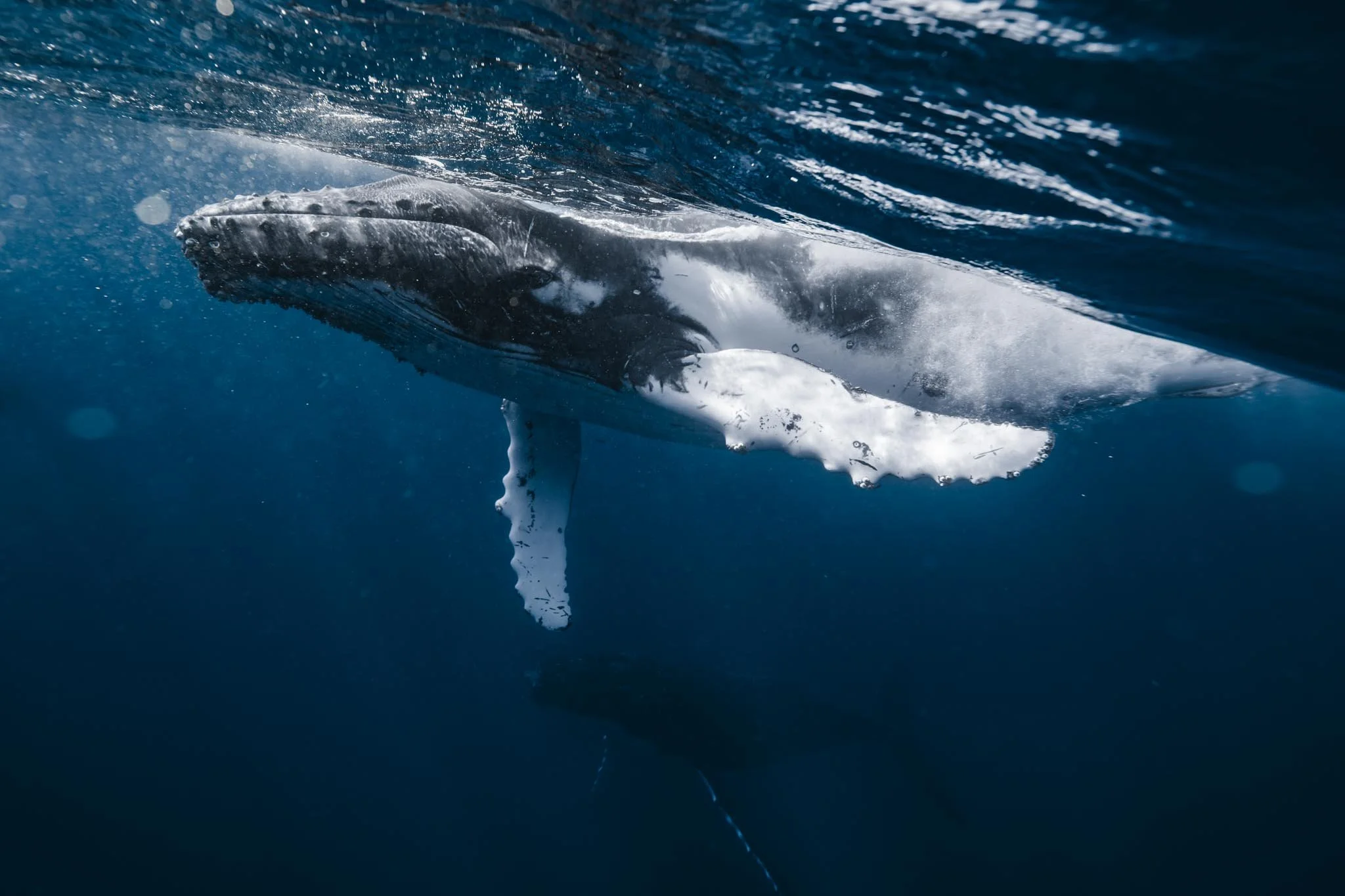
There are wildlife encounters that stay with you for a lifetime. Moments when the world seems to stop, your heart races, and you're suddenly reminded just how small you are in the grand scheme of things.
For me, Tonga gave me some of those moments.
In August 2025, I travelled to Vava'u, a small island group in the Kingdom of Tonga, to spend a week searching for humpback whales. I had dreamed of swimming with these incredible animals, but nothing could have prepared me for what it would feel like to be in the water alongside them.
Over five days on the ocean, I experienced curious adolescent whales coming within touching distance, a mother protecting her newborn calf, and the unmistakable vibrations of a male humpback singing beneath the surface.
But alongside the magic were some important lessons about wildlife tourism, the impact of social media, and why a meaningful encounter with nature should always come before the perfect photograph.
Welcome to island life
I arrived in Vava'u on a Sunday, which turned out to be a very quiet day on the island. Most places were closed, and there weren't exactly endless shops and restaurants to choose from anyway!
This was my first time visiting somewhere that felt truly remote. Coming from Australia, where we're so accustomed to being able to buy almost anything at any time of day, it was fascinating to experience a completely different pace of life.
We wandered around the local markets, learning about seasonal fruit and vegetables, what was grown locally and how difficult it could sometimes be to get certain items. It was a reminder of how much we take for granted back home, where convenience is something we're so used to that we rarely think twice about it.
We also spent time exploring the island, including climbing to its highest point for a beautiful viewpoint across the surrounding landscape. Vava'u was everything I had hoped for: lush, tropical, peaceful and surrounded by impossibly blue water.
Our accommodation was right on the waterfront, and I was welcomed with a freshly prepared coconut drink and views across the ocean. It was the sort of place where you could happily sit for hours doing absolutely nothing. I still miss waking up to that view!
And the food deserves a mention of its own. We were incredibly lucky to have a chef cooking for us every evening, who somehow managed to make coconut taste like bacon and even convinced me to enjoy tofu for the first time in my life! I certainly wasn't expecting to come home from Tonga with a newfound appreciation for tofu.
One evening, we also enjoyed a traditional Tongan night, complete with local food and a cultural dance performed by a family. It was a wonderful opportunity to experience a little more of Tongan culture and made the trip feel about so much more than just the whales.
Of course, I hadn't travelled all that way to sit around drinking coconuts and eating incredible food. There were whales to find!
5 am starts and a whole lot of patience
For the next five days, our mornings followed a fairly predictable routine.
Wake up at 5 am. Enjoy a freshly made breakfast. Get ready for the day. Be on the boat by 6 am, just before sunrise, and head out into the ocean in search of humpback whales.
I was particularly delighted to discover that an Australian on a previous trip had left behind a box of Weet-Bix. I'm not one to pass up cereal, even when travelling halfway around the world!
Once we were out on the water, though, the days were far less predictable.
Vava'u is a remote island group, and with remoteness comes weather that doesn't always cooperate. For much of our trip, the wind made it too rough to venture into the open ocean, so we spent our days exploring the sheltered waters around the smaller islands, hoping the whales would be seeking refuge there too.
Finding whales requires patience. You can spend hours searching without knowing whether you'll encounter one at all, and the ocean doesn't care how far you've travelled or how badly you want to see them.
But that's part of the experience. Wildlife encounters aren't guaranteed, and you have to learn to work with the conditions you're given.
Thankfully, on our second day, the waiting paid off in a way I could never have imagined.
The whale that came a little too close
Our second day hadn't been particularly eventful. We'd been searching for whales without much luck when a call came over the radio from our sister boat. They had found a couple of adolescent humpback whales that were curious and hanging around.
We made our way over, and before long, my group and guide were slipping into the water.
When swimming with whales, entering the water calmly and making as little noise as possible is important. That can be easier said than done when you're carrying a large, bulky underwater camera!
Over time, you learn how to ease yourself into the water without making too much of a splash, trying to be as unobtrusive as possible.
Once we were in, we began swimming in the direction our captain indicated.
And then we saw them. Two humpback whales.
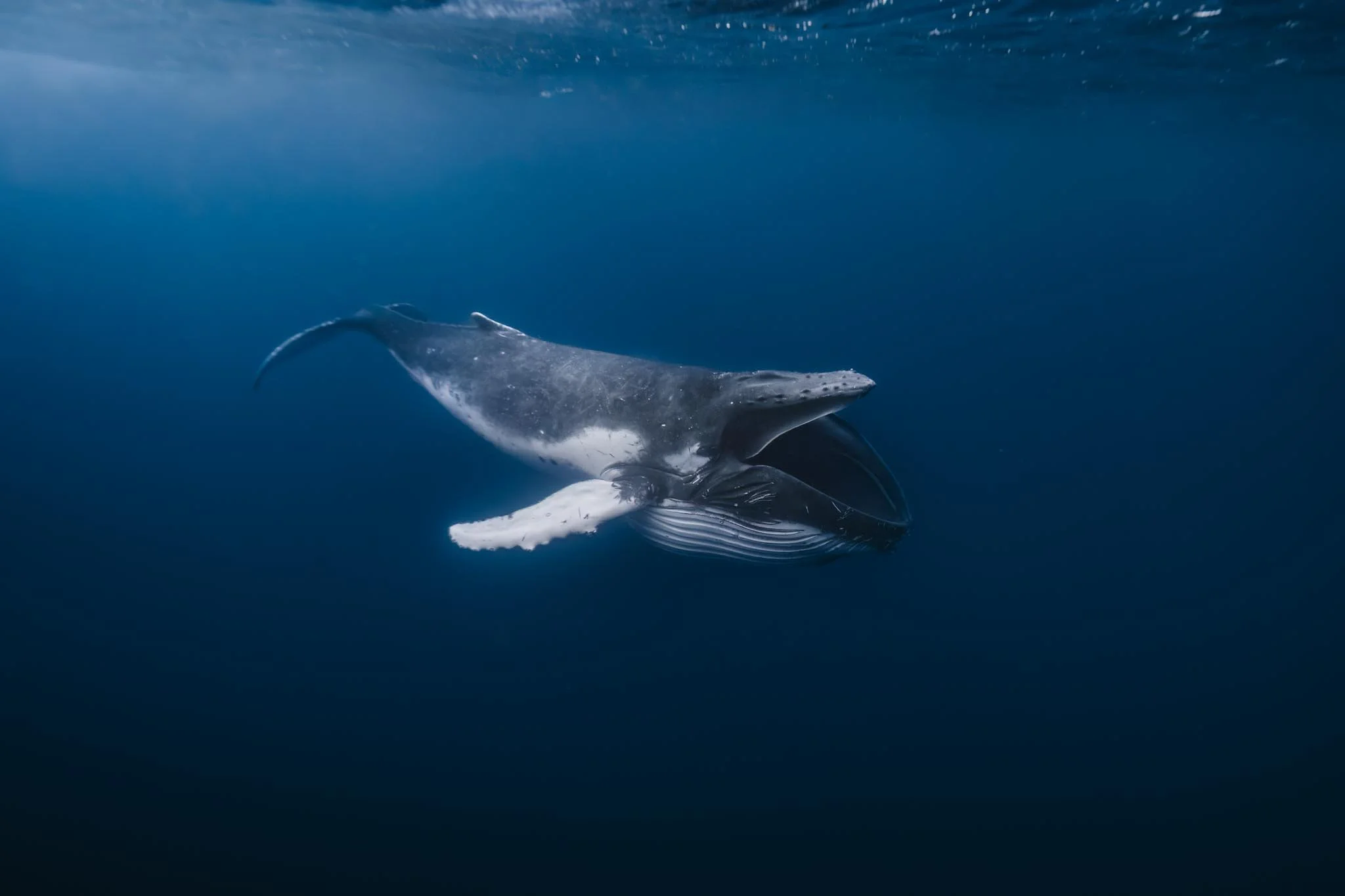
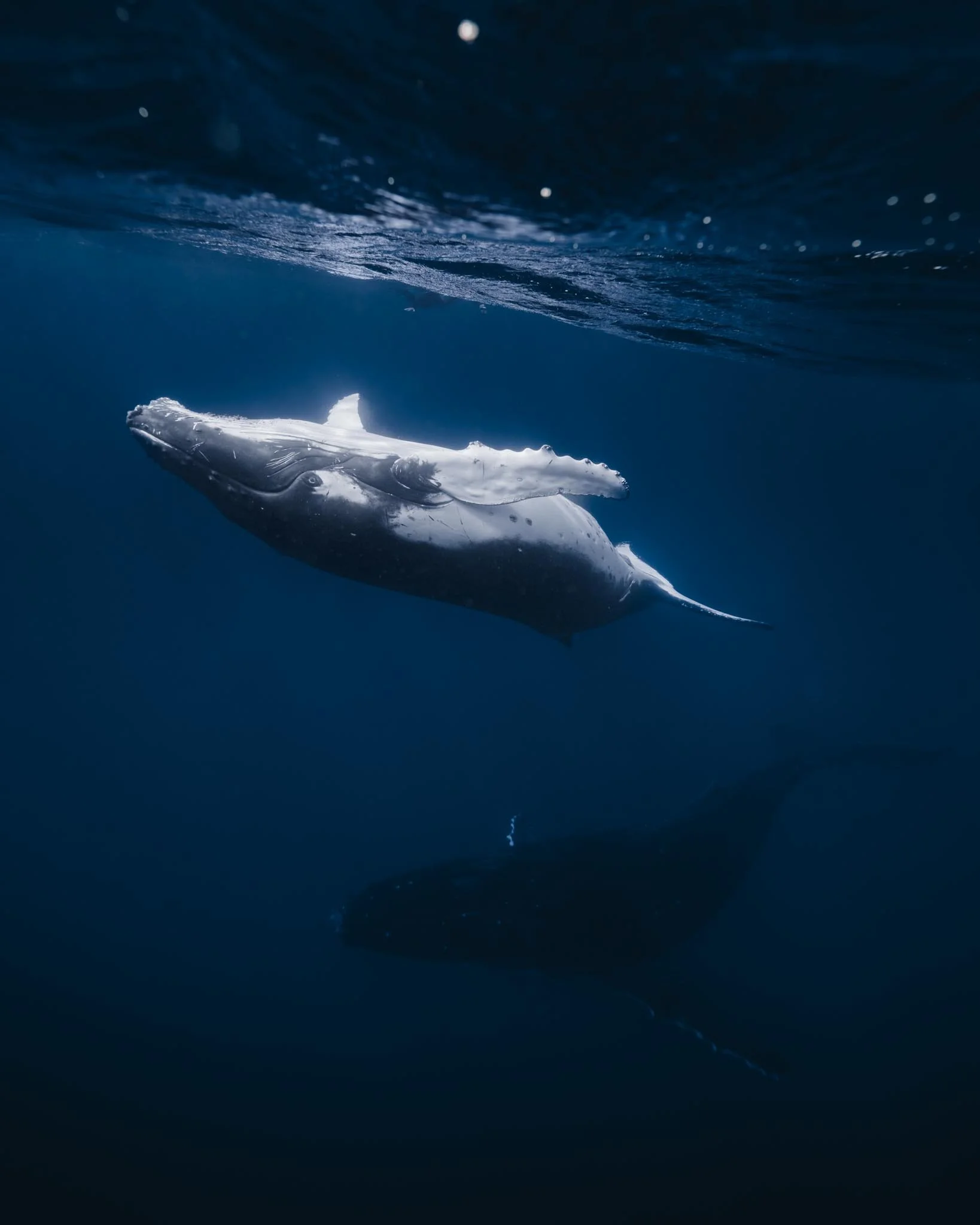
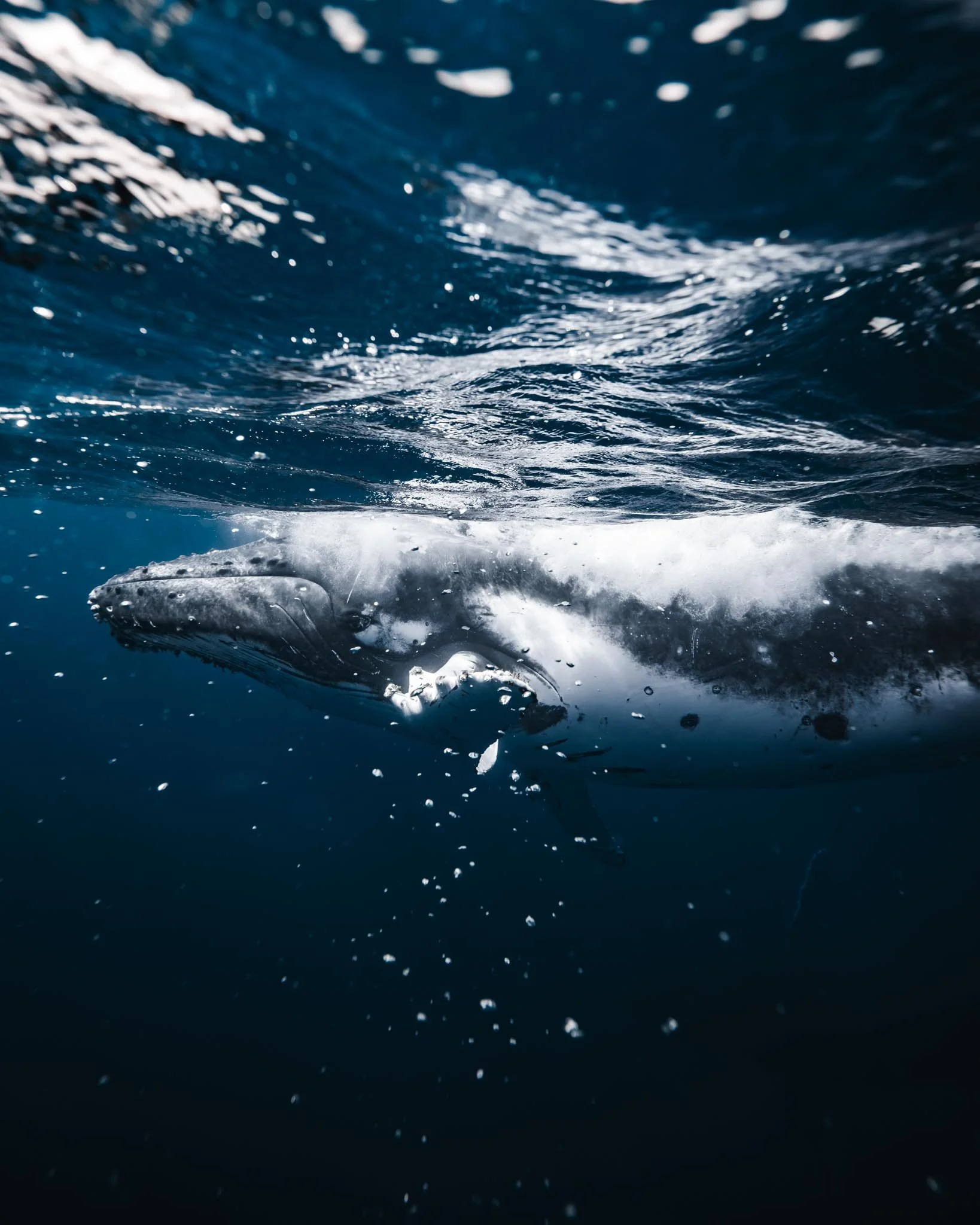
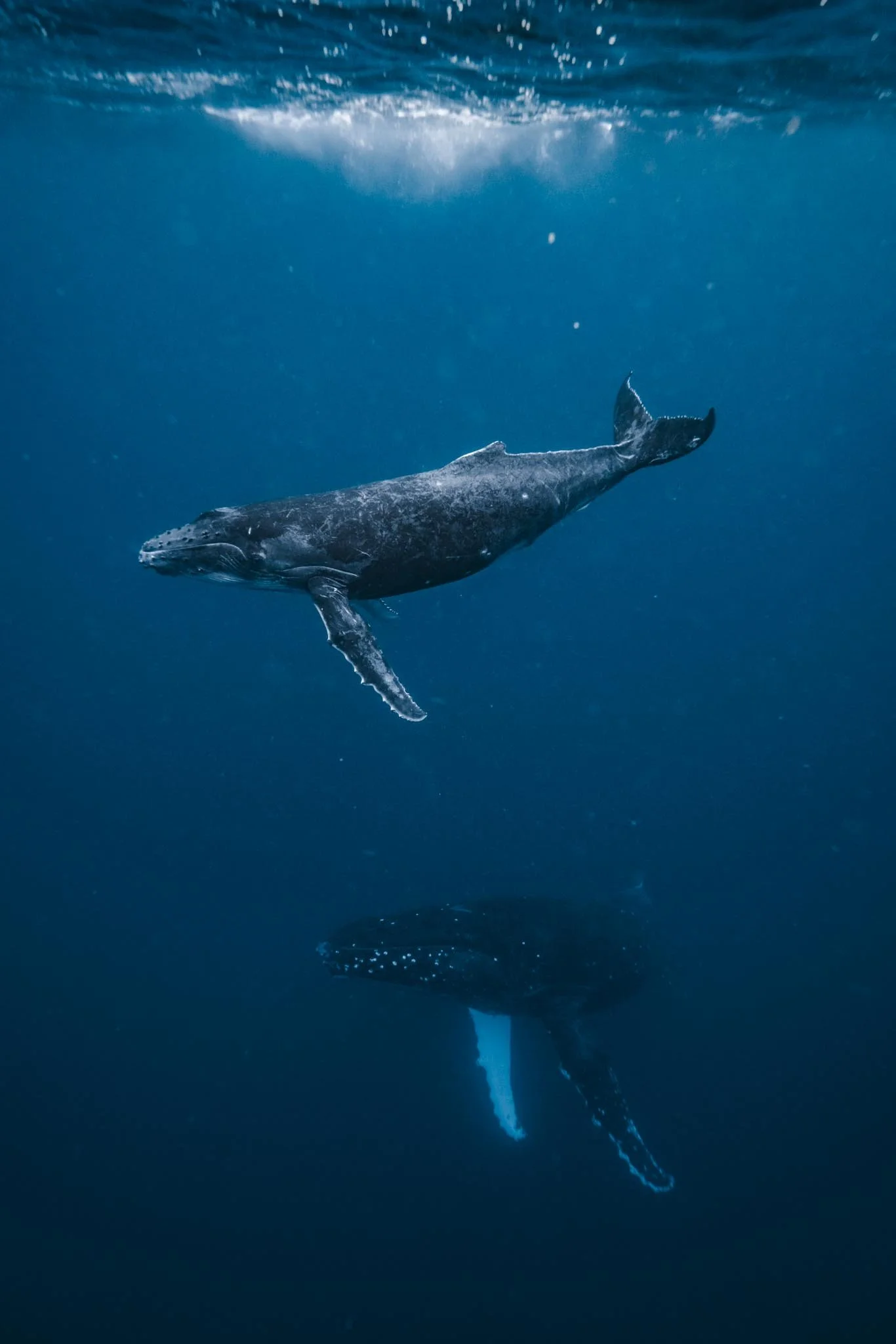
Now, when I say adolescent, please don't imagine small, manageable whales. These animals were still enormous, measuring well over 10 metres long.
Seeing a whale from a boat is one thing. Being in the water beside one is an entirely different experience. You suddenly become much more aware of their size, their movements and just how much space they occupy. You feel very, very small.
I began photographing one of the whales as it cruised past me. I was completely absorbed in the moment, watching it move effortlessly through the water. Then, without much warning, things changed.
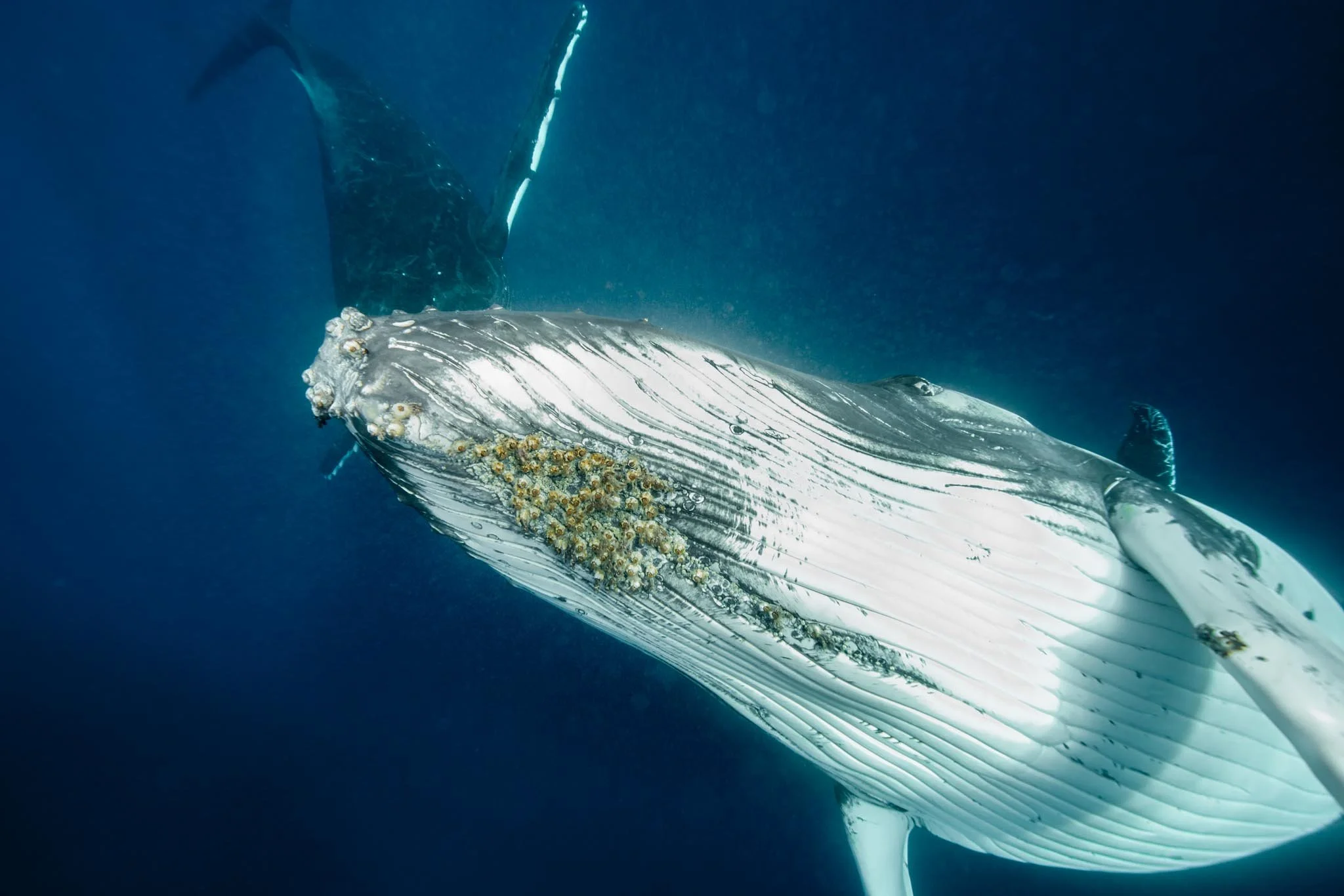
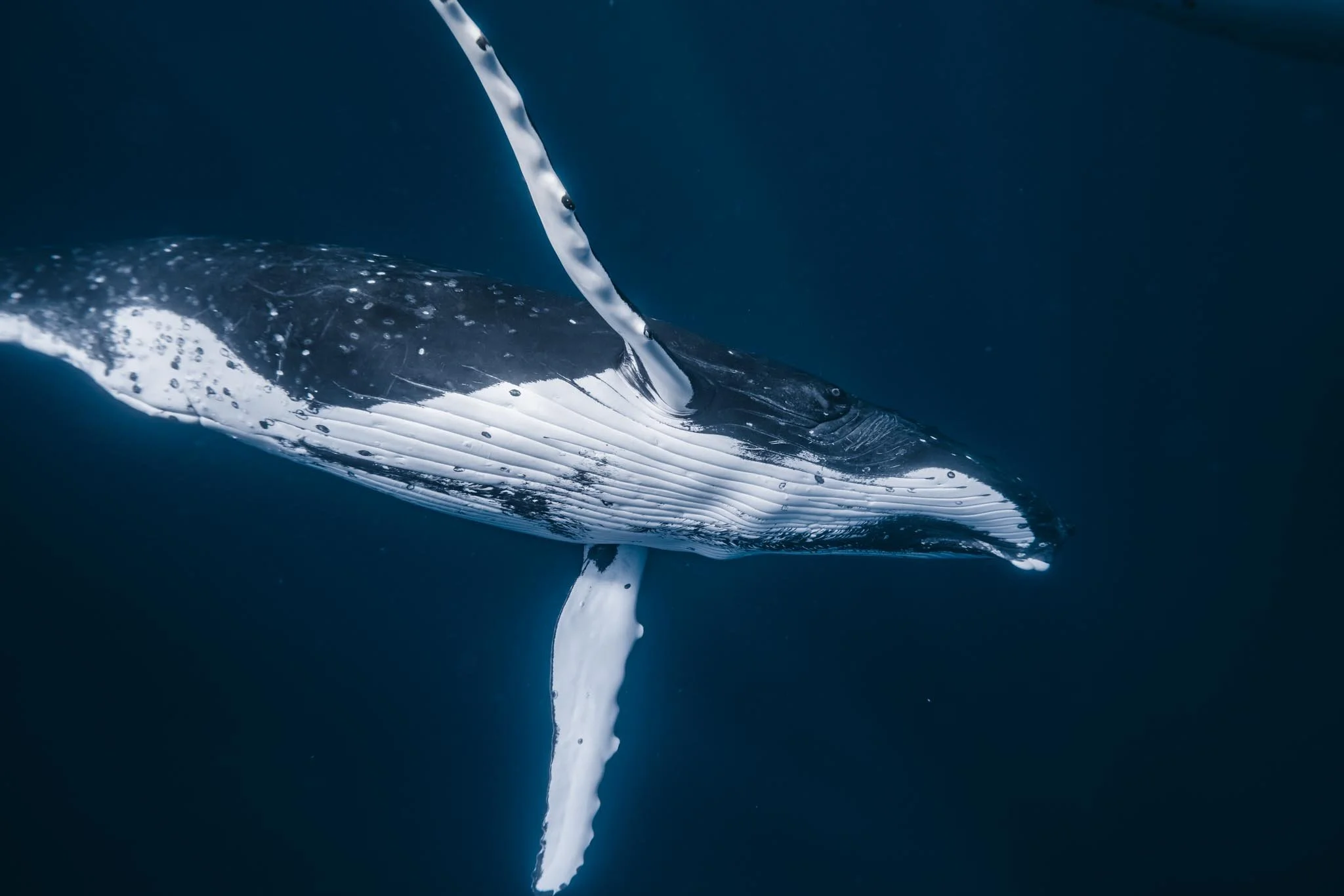
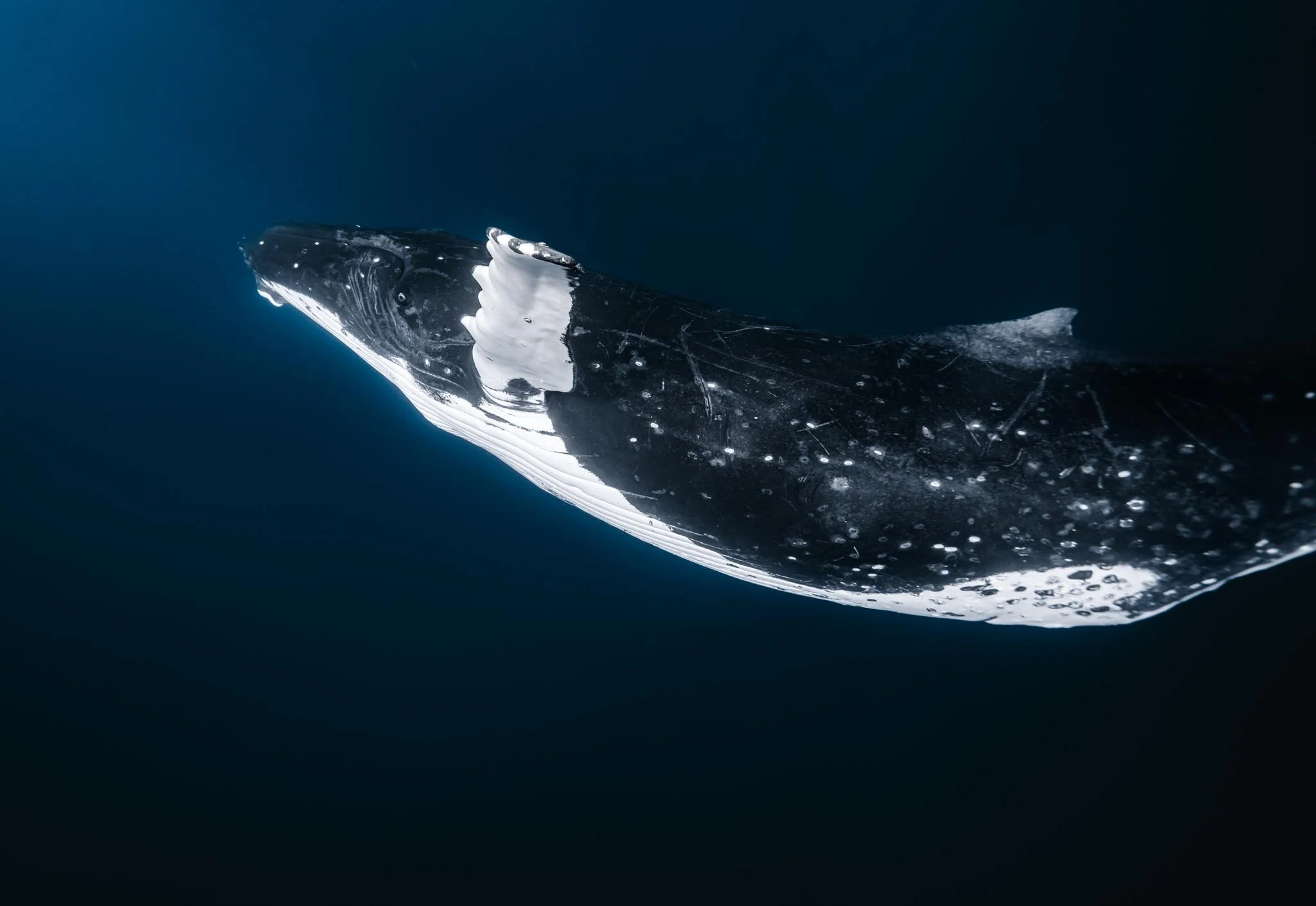
Humpback whales have the largest pectoral fins of any whale, with some reaching around five metres in length. These enormous fins help them manoeuvre through the water with remarkable agility.
As this whale swam past me, it made a simple movement with one of those massive pectoral fins and suddenly changed direction. It wanted a closer look at me. And by closer, I mean VERY close.
I tried to kick backwards, but freediving fins aren't exactly designed for quick, nimble escapes. I also had a large camera in my hands, and I needed to keep myself relatively upright so I wouldn't accidentally kick the whale in the face.
So there I was, trying to move backwards, manage my camera and avoid colliding with an animal several times my size. Not exactly the graceful underwater photographer moment I'd imagined!
The whale came within what felt like touching distance, looking directly at me. I remember being completely overwhelmed by the experience. I was excited, fascinated and very aware that I was sharing the water with an incredibly powerful wild animal.
Then I noticed that enormous, barnacle-covered pectoral fin coming towards me. For a moment, I genuinely wondered whether I was about to be taken out by it. But what amazed me most was how aware the whale seemed to be of where I was. Despite the difference in our size, it adjusted its movement, lowered its fin and passed beneath me without making contact. It was an incredible display of control and awareness from an animal so much larger than myself.
We eventually got out of the water, our hearts absolutely racing and our faces hurting from smiling.
And then we went back in. Because apparently, one close encounter wasn't enough.
On my next jump, the same whale once again seemed very interested in coming straight towards me. This time, my guide actually grabbed me and pulled me backwards just in time, as the whale looked as though it might give me a little nose bop! It was equal parts exhilarating and humbling.
There is something difficult to describe about being looked at by an animal of that size. For a moment, you aren't simply observing a whale. You're sharing space with it, and it is aware of you too.
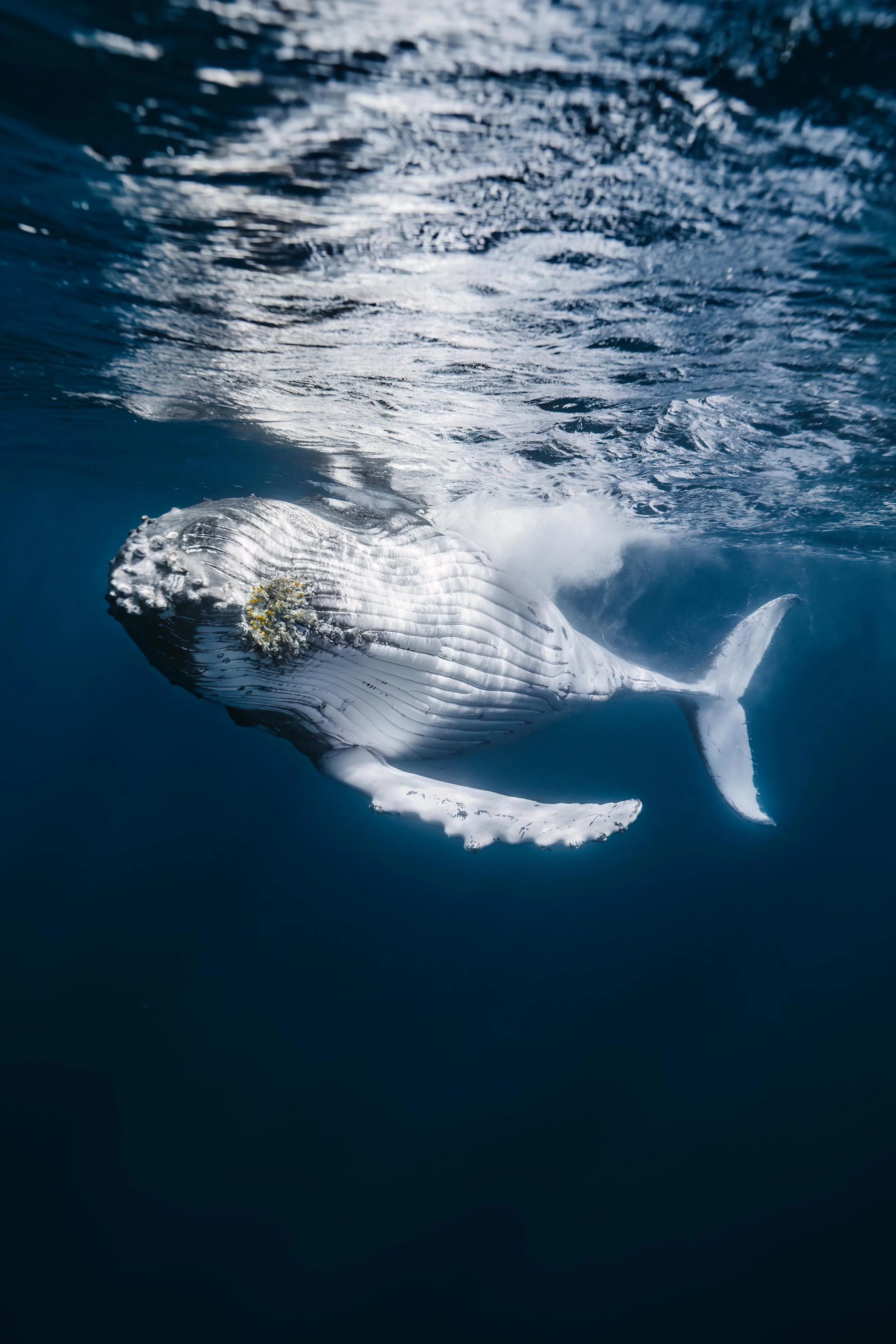
That encounter has stayed with me ever since. In fact, this very whale features in some of my Tonga photography prints, which makes those images particularly special to me. Whenever I look at them, I remember not just what the whale looked like, but what it felt like to be there.

A mother, her calf and the sound of a song
Our fourth day brought two very different, but equally unforgettable, experiences.
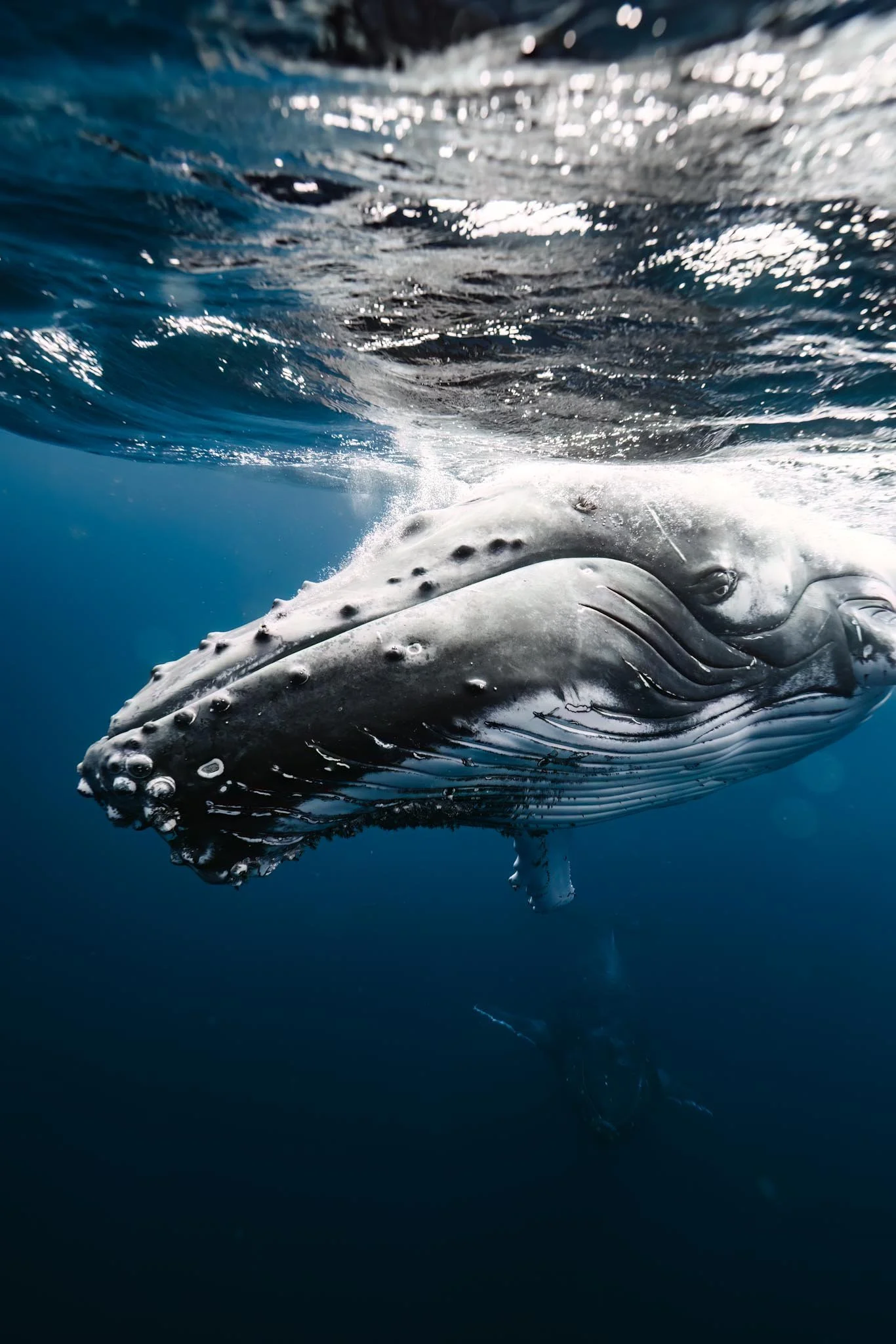
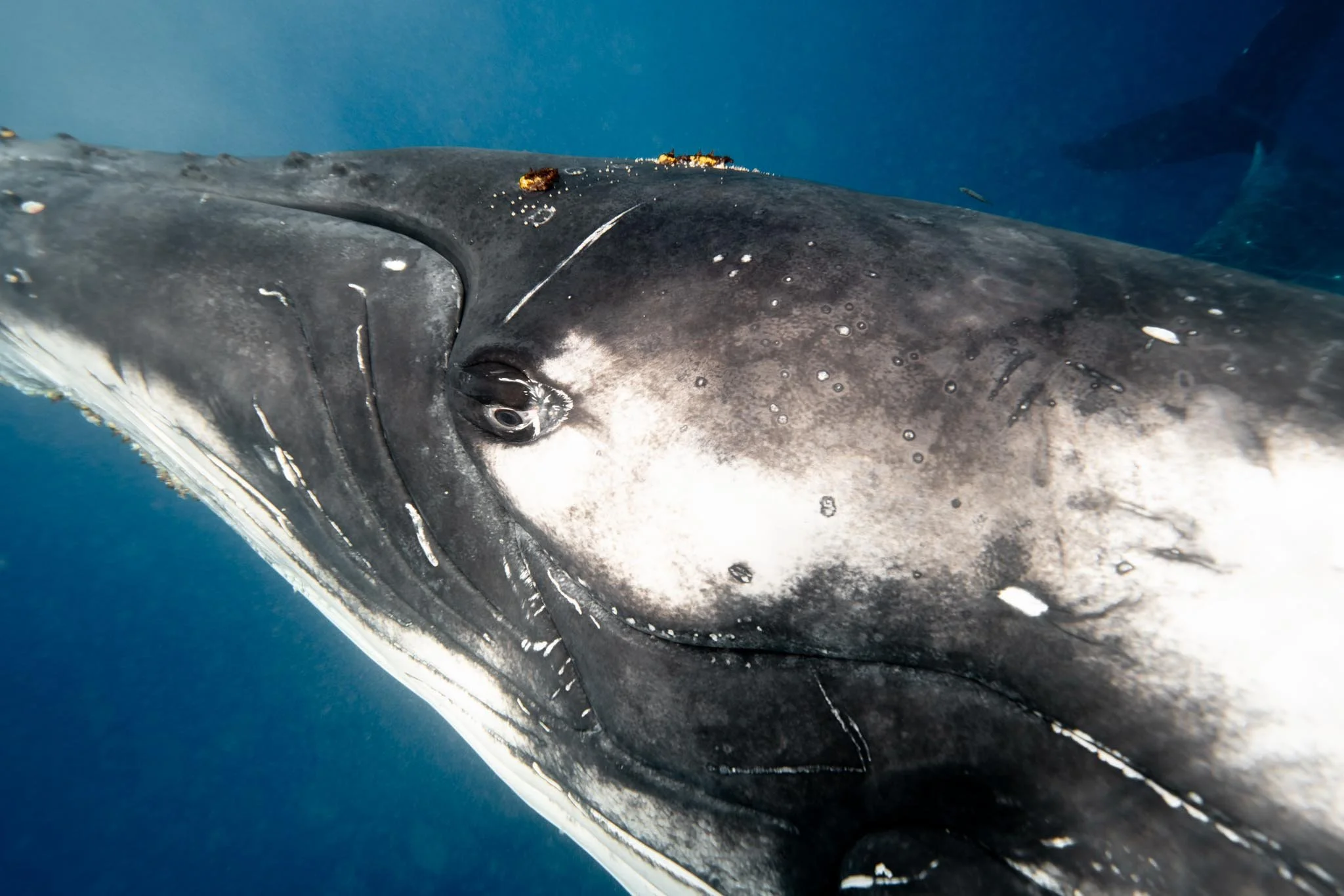
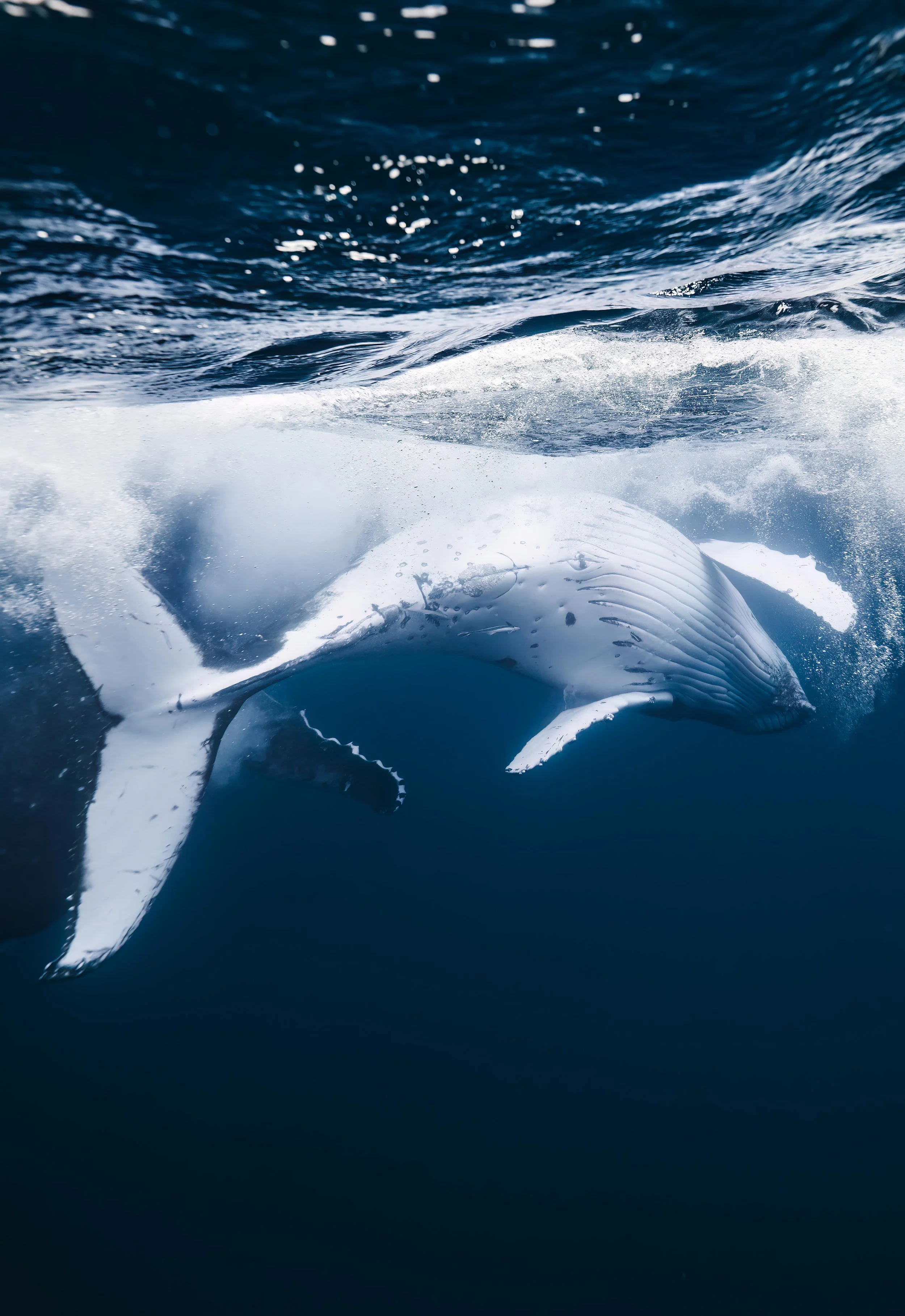
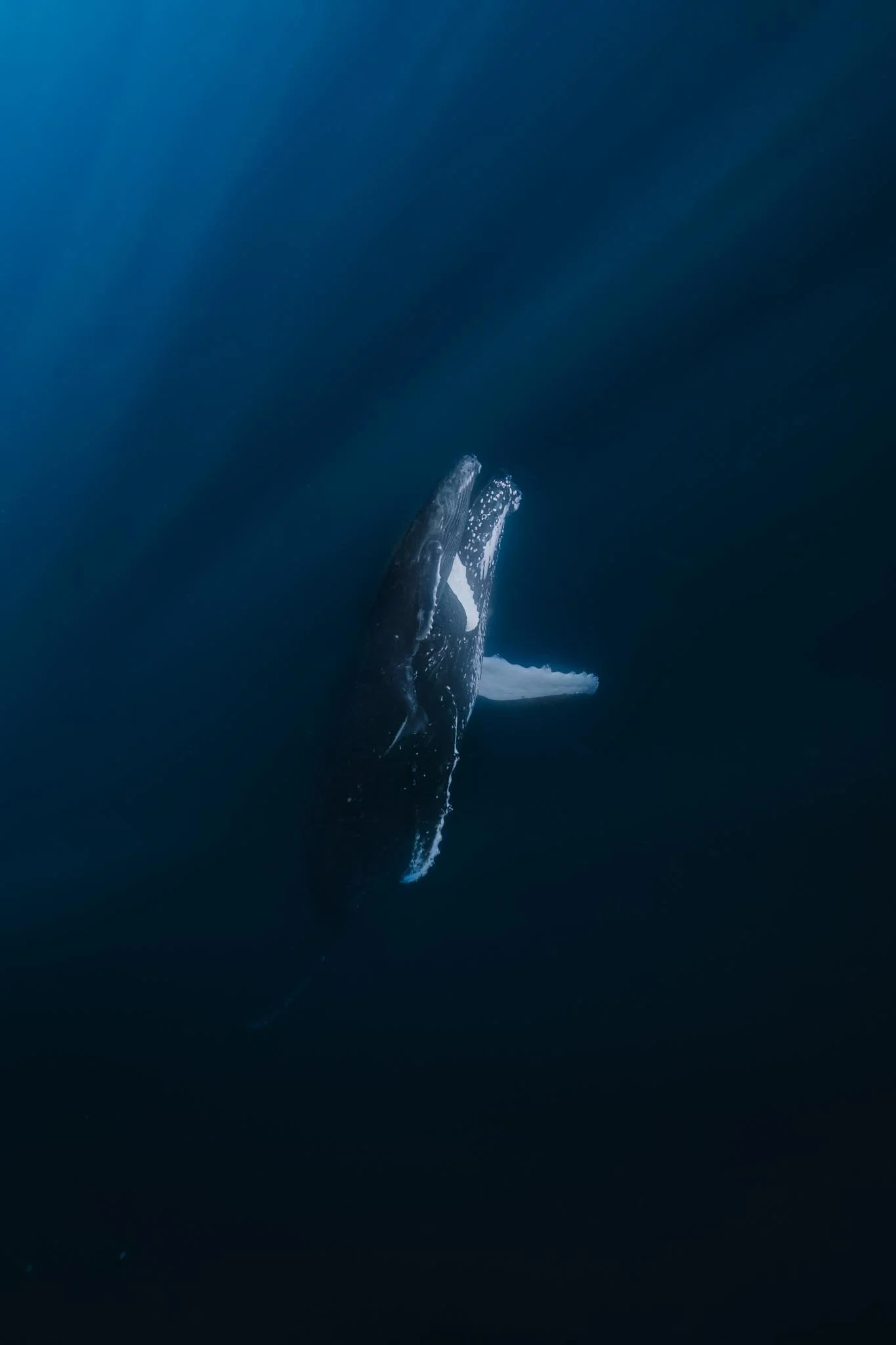
That morning, we found a mother humpback whale resting with her calf.
There is something incredibly special about witnessing a mother and baby in the wild, and this encounter was no exception.
The calf nestled close to its mother, sheltered beneath her enormous pectoral fins. It would surface when it needed to breathe, staying close to the animal responsible for protecting it in an unfamiliar and potentially dangerous world.
The calf looked so small beside its mother, but appearances can be deceiving. Humpback calves are already around four metres long at birth!
It was a beautiful reminder that even the largest animals on the planet begin life as babies, entirely dependent on their mothers.
We watched quietly, appreciating the opportunity to witness such a private moment in their lives. When you're around wildlife, it's important to remember that these animals aren't there for our entertainment. Sometimes the most meaningful thing you can do is simply observe without asking anything of them.
That afternoon brought a completely different experience.
We were near the front of the boat when we began hearing something beneath the surface.
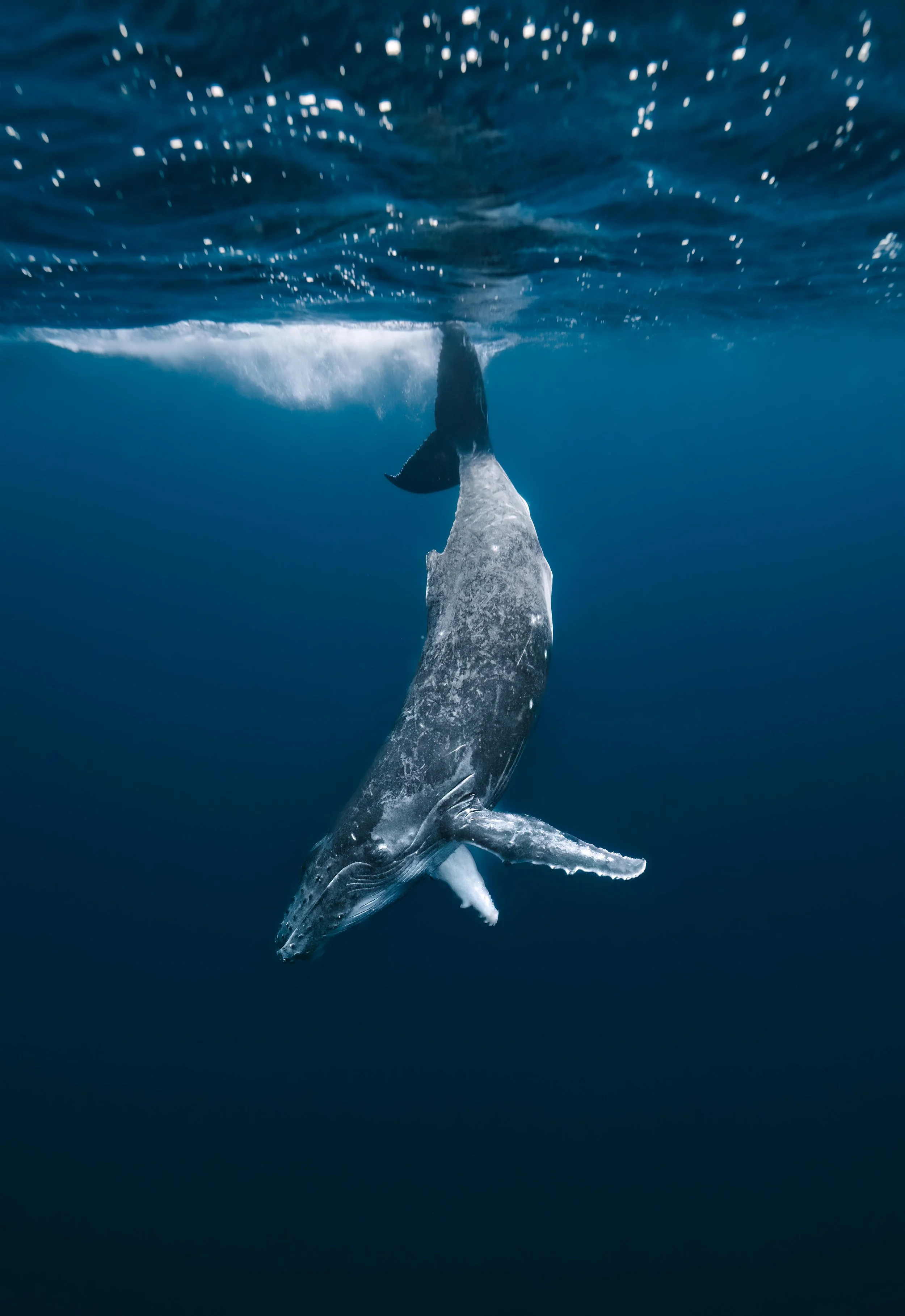
A male humpback was singing.
Humpback whale songs are one of the most extraordinary sounds in the natural world. These complex vocalisations can travel through the ocean, carrying across distances that make the underwater world feel even more vast than it already is.
We slipped into the water, but there was no whale in sight.
Instead, we followed the sound.
The song grew stronger as we moved through the water, even though we still couldn't see its source. Eventually, we found ourselves directly above the singing whale.
And that was when I experienced something I will never forget.
When you're close enough to a singing humpback, you don't just hear the song through your ears. You can feel it travelling through the water and vibrating through your body.
The sound seemed to surround us, filling the space beneath the surface.
It was haunting, beautiful and unlike anything I had experienced before.
There we were, floating in the ocean, listening to a whale sing somewhere beneath us. We couldn't see him, but we could feel his presence through the sound.
As a photographer, I'm naturally drawn to capturing wildlife through images. But this was a reminder that not every meaningful wildlife encounter needs to be photographed. Some experiences are about sound, sensation and simply being present.
I couldn't take a photograph of what that song felt like moving through my body.
And perhaps that's what made it so special.
When wildlife tourism goes wrong
As incredible as the trip was, there were also some conversations that left a lasting impression on me.
Our captain had lived in Tonga for decades and had been running whale-swimming trips for many years. He spoke about the changes he'd witnessed in whale behaviour, particularly as social media has encouraged some people to chase closer encounters and the perfect photograph.
He explained that restrictions had been introduced to prevent swimmers from diving beneath the surface towards the whales, following concerns about people disturbing resting whales, particularly mothers and calves.
The consequences were becoming noticeable. Whales that had once been curious and comfortable around swimmers were increasingly moving away.
Even in our five days on the water, I could see why respecting their space mattered. We had to remain at the surface, keep our distance and allow the whales to decide whether they wanted to approach us. Some were curious; others chose to swim away. When they did, we respected that and moved on.
It made me think about how social media has changed wildlife tourism. We're constantly shown incredible photographs of people getting close to wild animals, but we rarely see what happened outside the frame. Was the animal comfortable, or was it trying to get away? Did the photographer wait patiently, or pursue it for the perfect shot?
As a wildlife photographer, I understand the desire to capture an extraordinary moment. But there's a difference between photographing wildlife and disturbing it for a photograph.
That curious adolescent whale that came within touching distance of me will always be one of my most treasured encounters. But what made it so special wasn't simply how close it came. It was that the whale chose to investigate me.
I wasn't entitled to that interaction, and I couldn't have forced it to happen. The whale was free to approach, just as it was free to swim away. Being trusted with that moment, however briefly, was an incredible privilege.
I want my photography to celebrate wildlife, not come at its expense. Sometimes that means keeping your distance, putting the camera down or accepting that an encounter simply isn't going to happen.
The ocean is their home. We're just visitors, and we have a responsibility to behave like it.
Until next time, Tonga
I travelled to Tonga hoping to photograph humpback whales, and I came home with images and memories I'll treasure for the rest of my life.
From curious whales swimming impossibly close to the vibrations of a male's song travelling through my body, it was an experience that reminded me just how extraordinary the natural world can be.
But more than anything, it reinforced why I believe it's so important to protect these animals and respect their boundaries.
The greatest wildlife encounters aren't the ones we force. They're the ones we're fortunate enough to be invited into.