
Bula!
After spending five days swimming with humpback whales in Tonga, I headed to Fiji for the last week of my adventure. My plan was to work my way down in size when it came to my wildlife encounters. After all, having spent the previous week sharing the water with whales over 10 metres long, I thought it might be nice to move on to something a little smaller.
Fiji was going to be my first time scuba diving with sharks.
Little did I know that this trip would leave me even more obsessed with these incredible animals than I already was.
A sweaty start to solo travel
I landed at Nadi Airport and made my way towards my hotel across the road. Easy enough, right?
Well, not when you're carrying a large, heavy suitcase, a bag full of freediving fins and a camera bag.
What I hadn't realised was that the hotel ran a shuttle bus every 15 minutes. Instead, I decided to haul all my gear across the road myself, arriving at the hotel absolutely dripping in sweat. A brilliant start!
This was the part of my trip where I would be travelling completely solo, rather than with a group as I had in Tonga.
I love travelling with other people, sharing experiences and having someone to laugh with when things go wrong. But there's something special about travelling alone, too. You get to move at your own pace, make your own decisions and often find yourself meeting people you might never have spoken to otherwise.
After a night at the hotel, I made my way to the ferry terminal and boarded the boat that would take me to my home for the next four nights: Kuata Island, home of the famous bull shark dives.
Welcome to Kuata Island
After around two hours on the ferry, we arrived at the island.
I nervously watched as my luggage was unloaded onto a little dinghy, quietly hoping I wasn't about to witness my camera gear sinking to the bottom of the ocean before my trip had even begun.
Thankfully, everything made it safely across!
The scenic boat ride to the resort came with a particularly memorable welcome. A local stood on what is known as Warrior Rock, dressed in traditional attire, greeting arriving guests. It made for an impressive entrance and certainly got me excited for the days ahead.
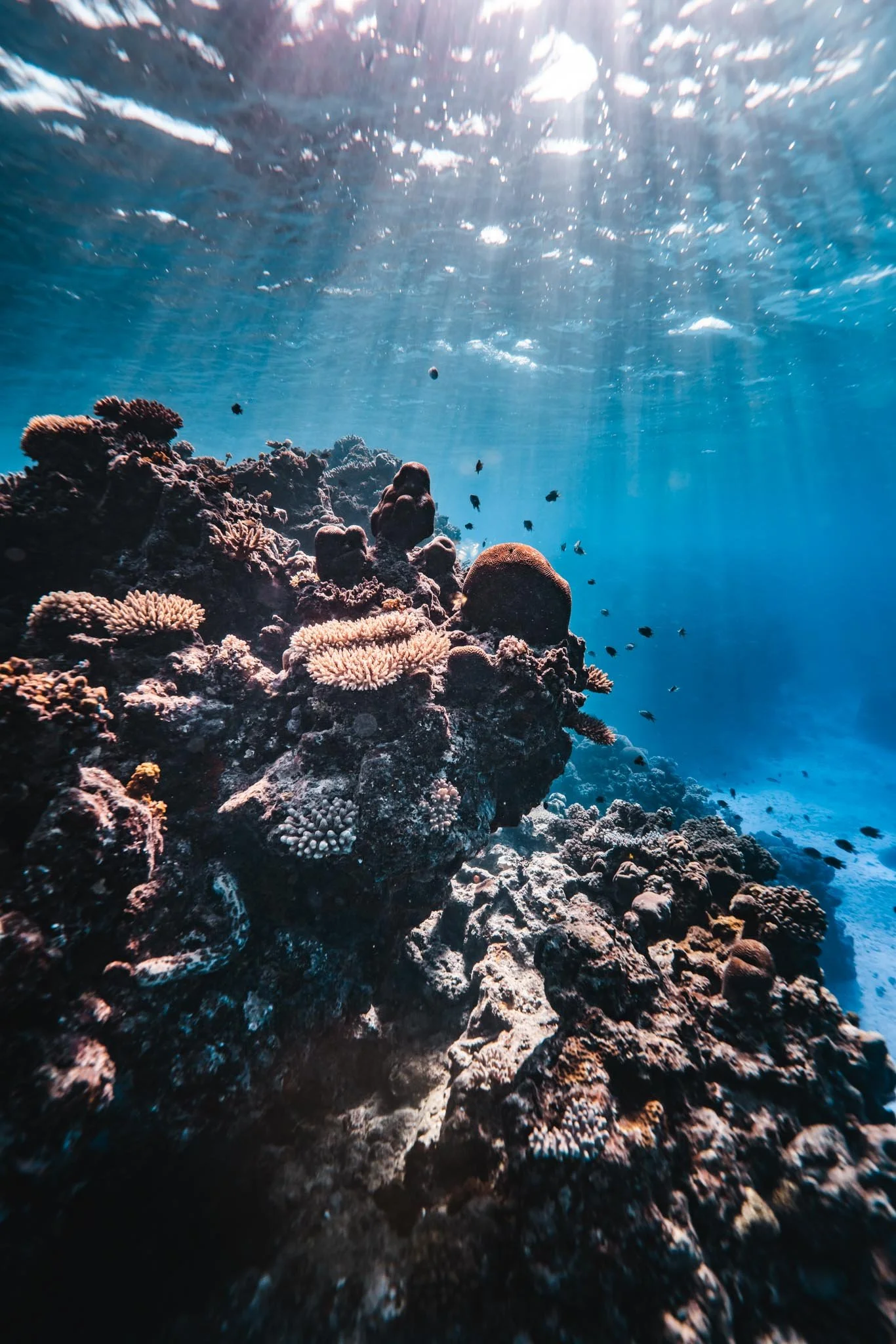
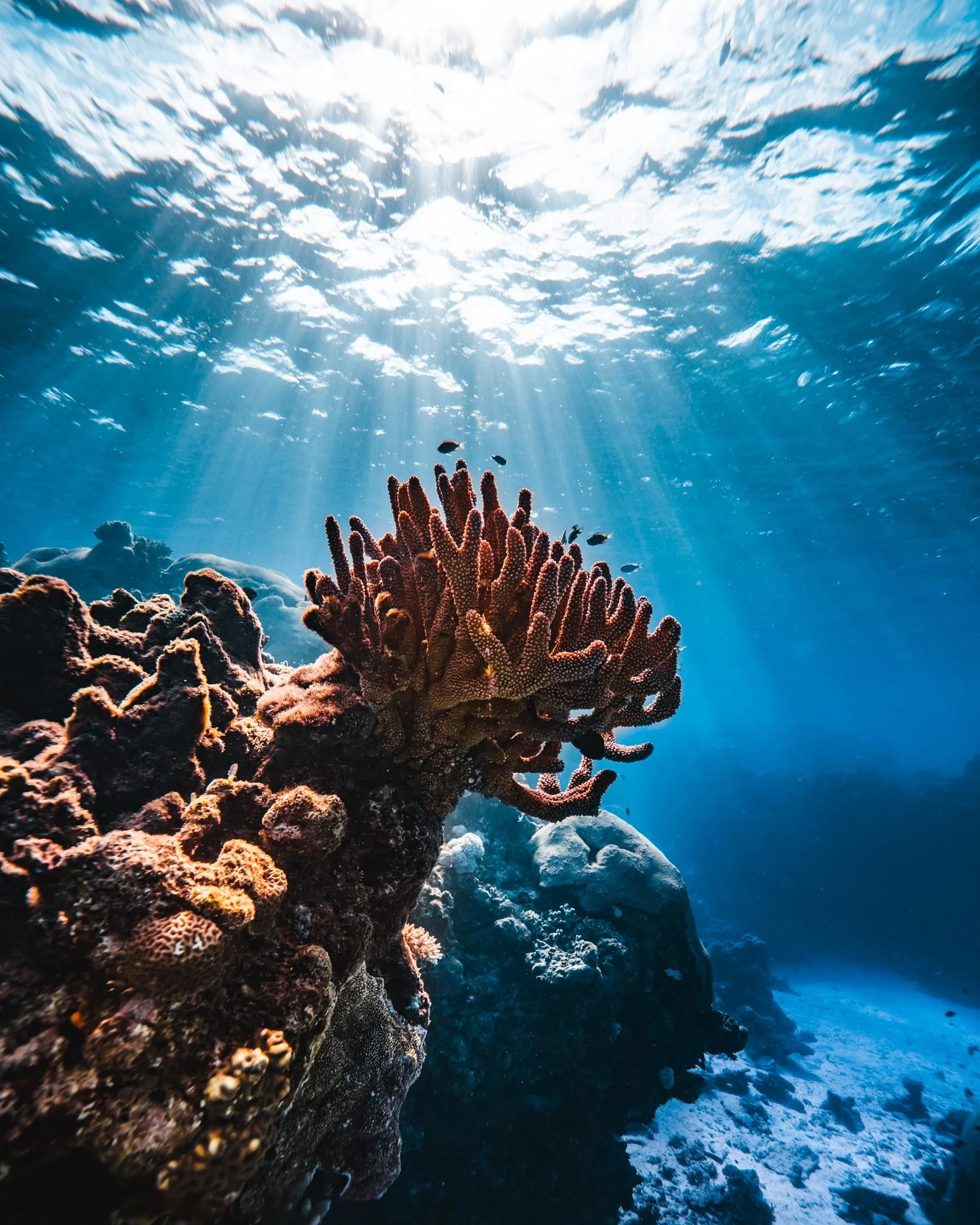
Kuata was beautiful, with its own surrounding coral reef and the sort of tropical island scenery that makes you want to put your bags down and head straight into the water.
Naturally, that is exactly what I did.
After settling into my cabin and grabbing some lunch, I pulled on my wetsuit, packed my camera and headed out to explore the reef.
The corals were beautiful, and I spotted marine biologists working underwater on a coral restoration project. It was wonderful to see people actively working to restore and protect the reef that makes these islands so special.
I also had my first encounter with the dreaded triggerfish.
Until then, my experience with triggerfish had been limited to watching videos on social media of them chasing divers and snorkellers. I had never encountered one in person, and I was suddenly very aware of why they had developed such a reputation!
One noticed me and started following me around. I was feeling rather grateful for my full-length wetsuit, which at least offered some protection from any unwanted nips.
Luckily, I seemed to have wandered into another triggerfish's territory. The two became distracted by each other, giving me the perfect opportunity to make my escape.
One wildlife encounter down, and I hadn't even made it to the sharks yet!
That evening, I was sitting down to dinner by myself when one of the marine biologists working on the island approached me and asked if I'd like to join them for a card game.
I wish I could remember what we played, because I had such a good time!
It was a lovely reminder of one of the things I enjoy most about solo travel. When you're on your own, you're often more open to meeting new people and joining in with whatever is happening around you.
I went to bed that night excited for the following morning, when I'd finally be diving with bull sharks.
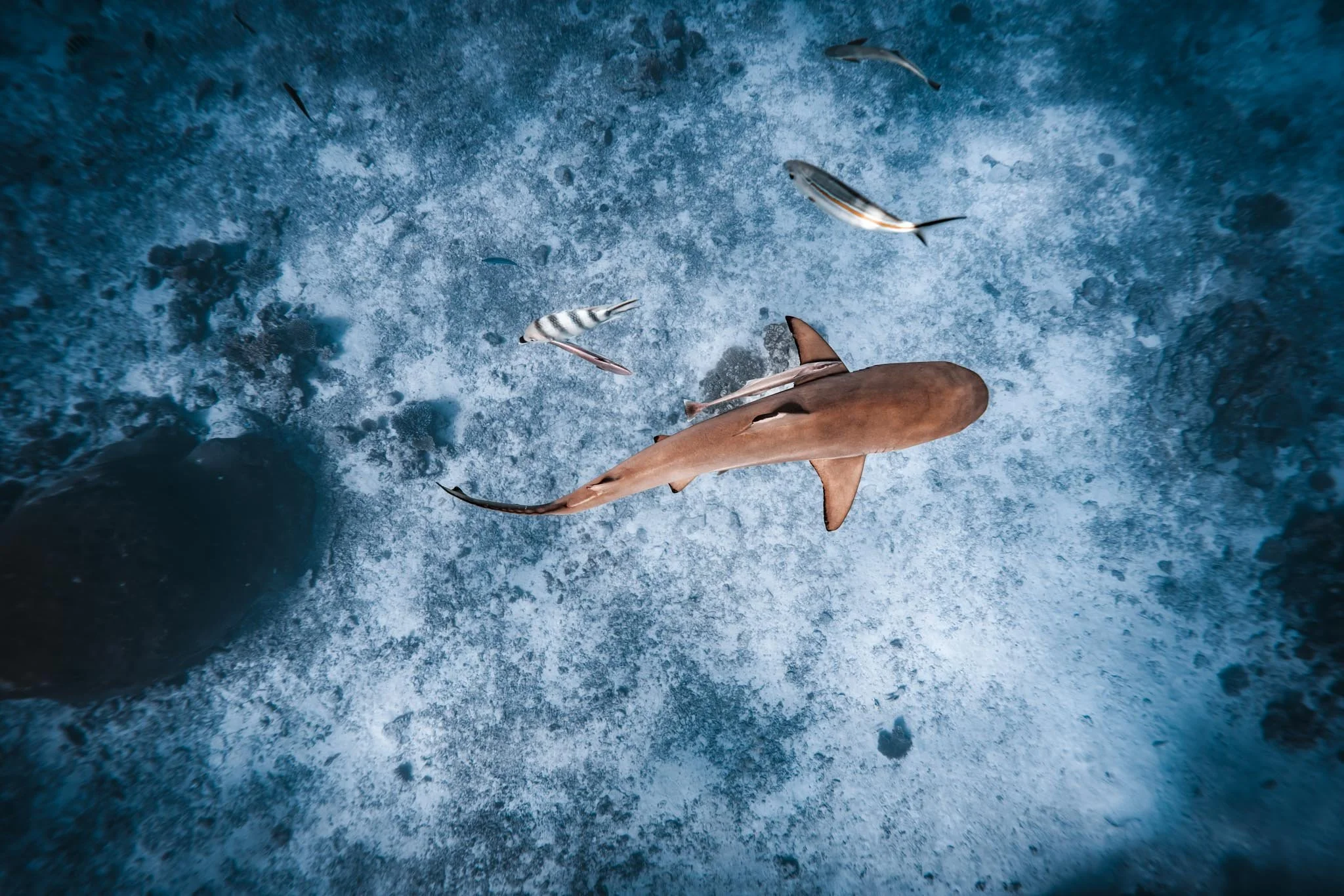
My first dive with bull sharks
I woke up ready for the day, although I can't say I was entirely free of nerves.
I knew my parents would be very nervous about this particular adventure. In fact, my mum had specifically preferred not to know which day I was going diving because she was worried about it!
Sorry, Mum.
I'd spent months watching shark documentaries and learning as much as I could about these animals, but knowing about sharks and actually getting into the water with them are two very different things.
I was nervous throughout the morning, but something changed as soon as I boarded the boat and we headed towards the dive site. My nerves settled, and I found myself feeling surprisingly calm.
I was the only guest on the dive with my scuba certification, so while the other divers had their guides hold their hands, I followed my own guide and made sure to pay attention.
One thing about diving is that everyone looks remarkably similar in a wetsuit, mask and fins. I really didn't want to lose track of my guide underwater!
We descended towards the sandy bottom. I was so busy concentrating on following everyone that I didn't even notice what was happening in front of me.
It wasn't until I reached the bottom, settled onto the sand and looked up that I finally saw them.
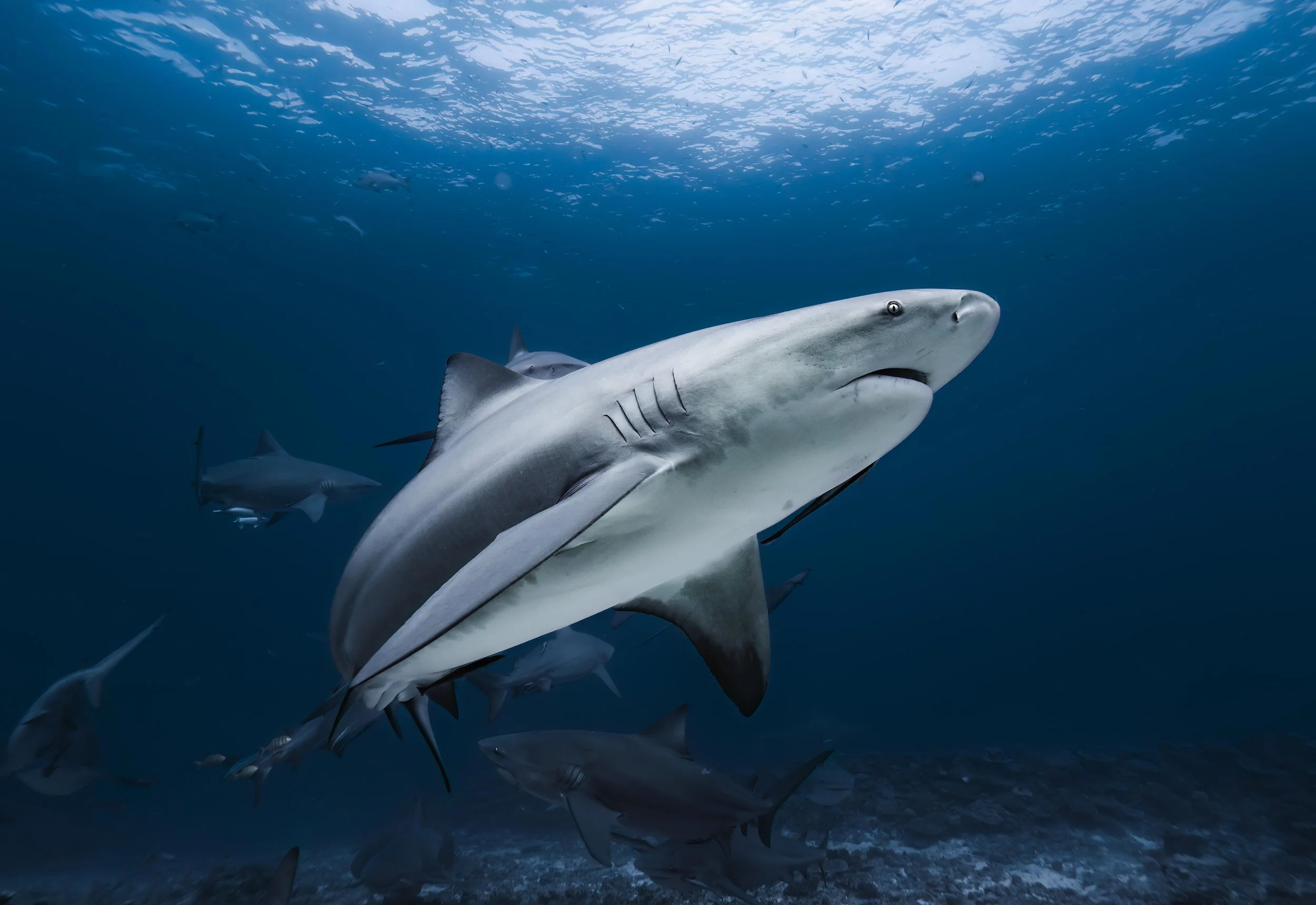
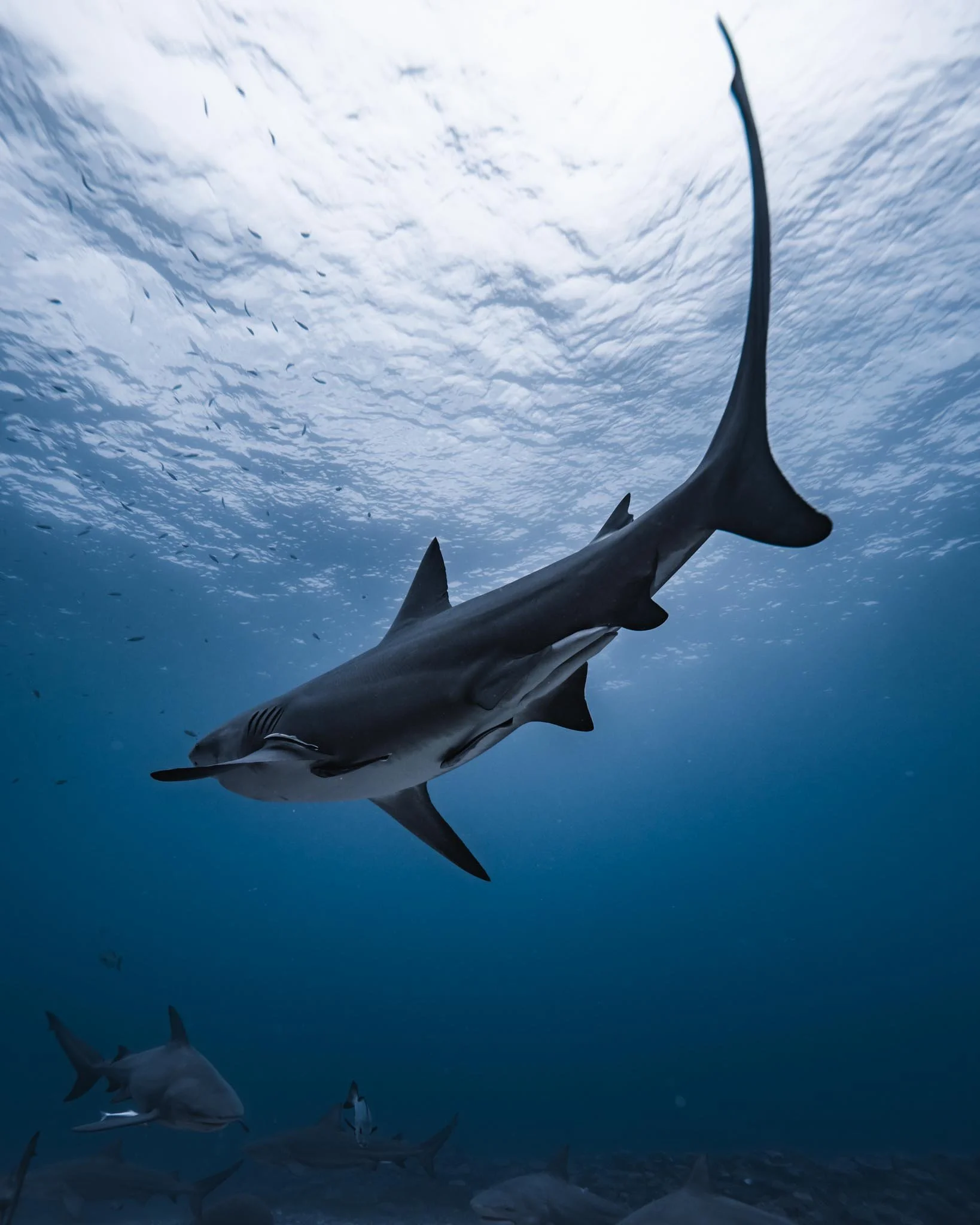
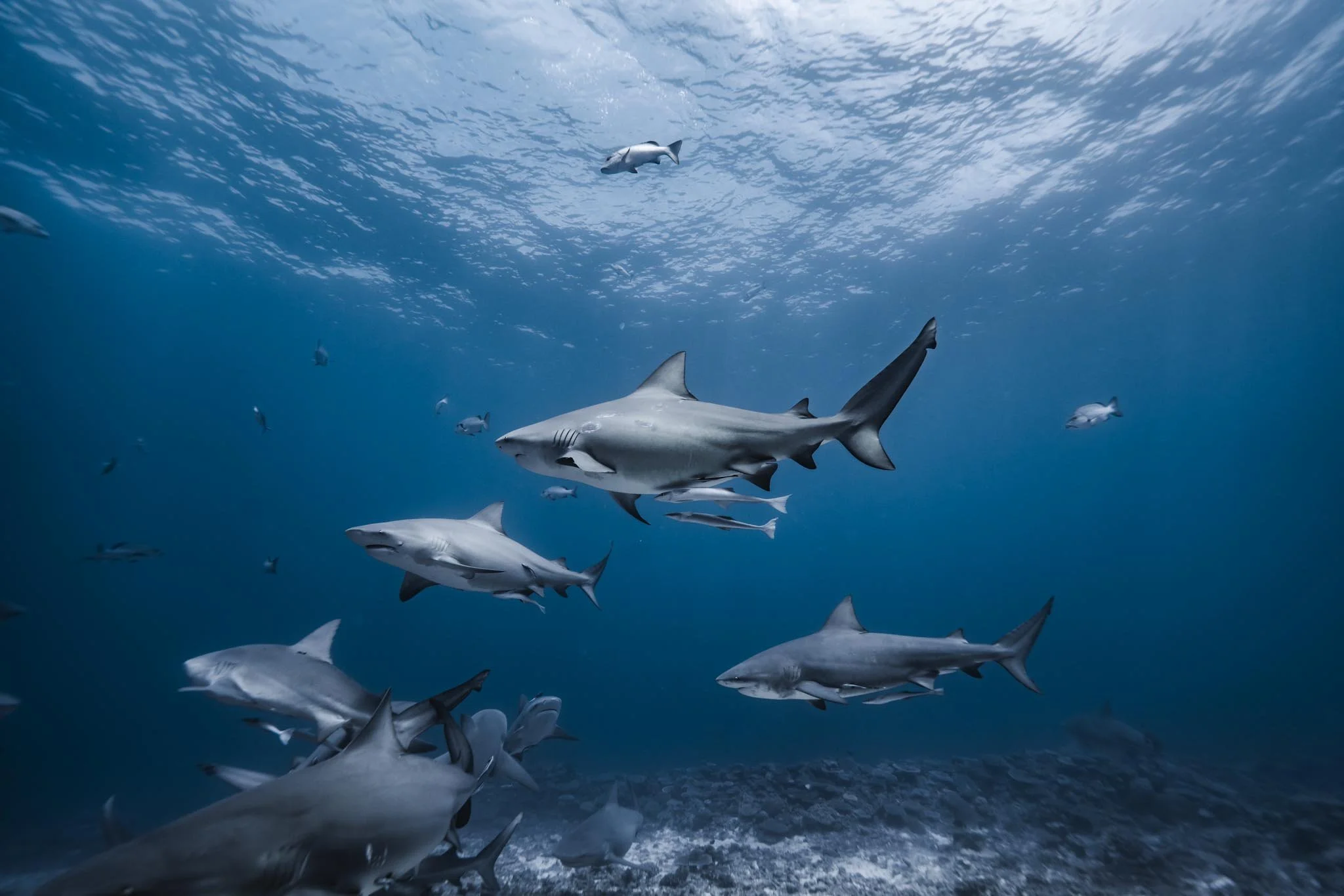
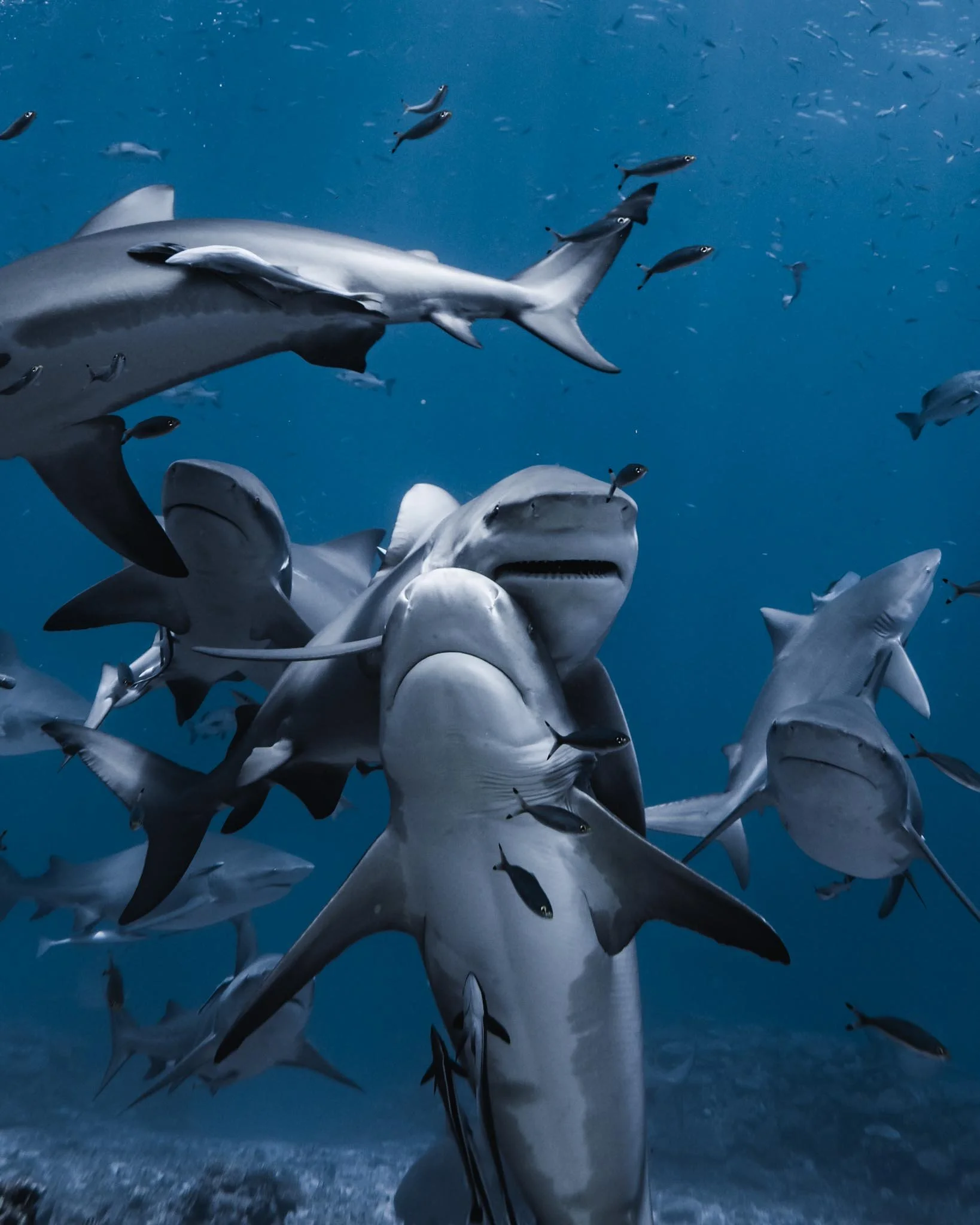
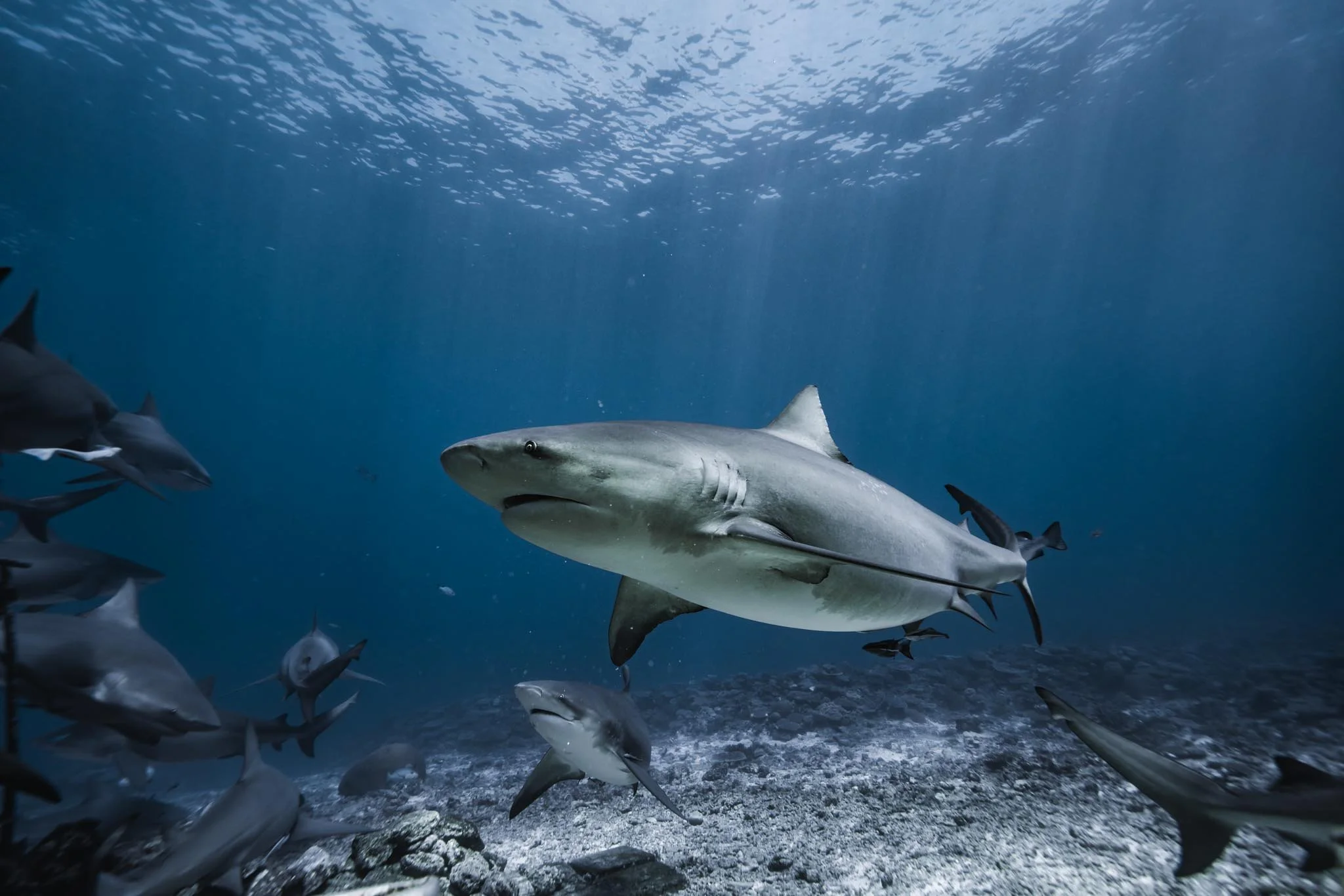
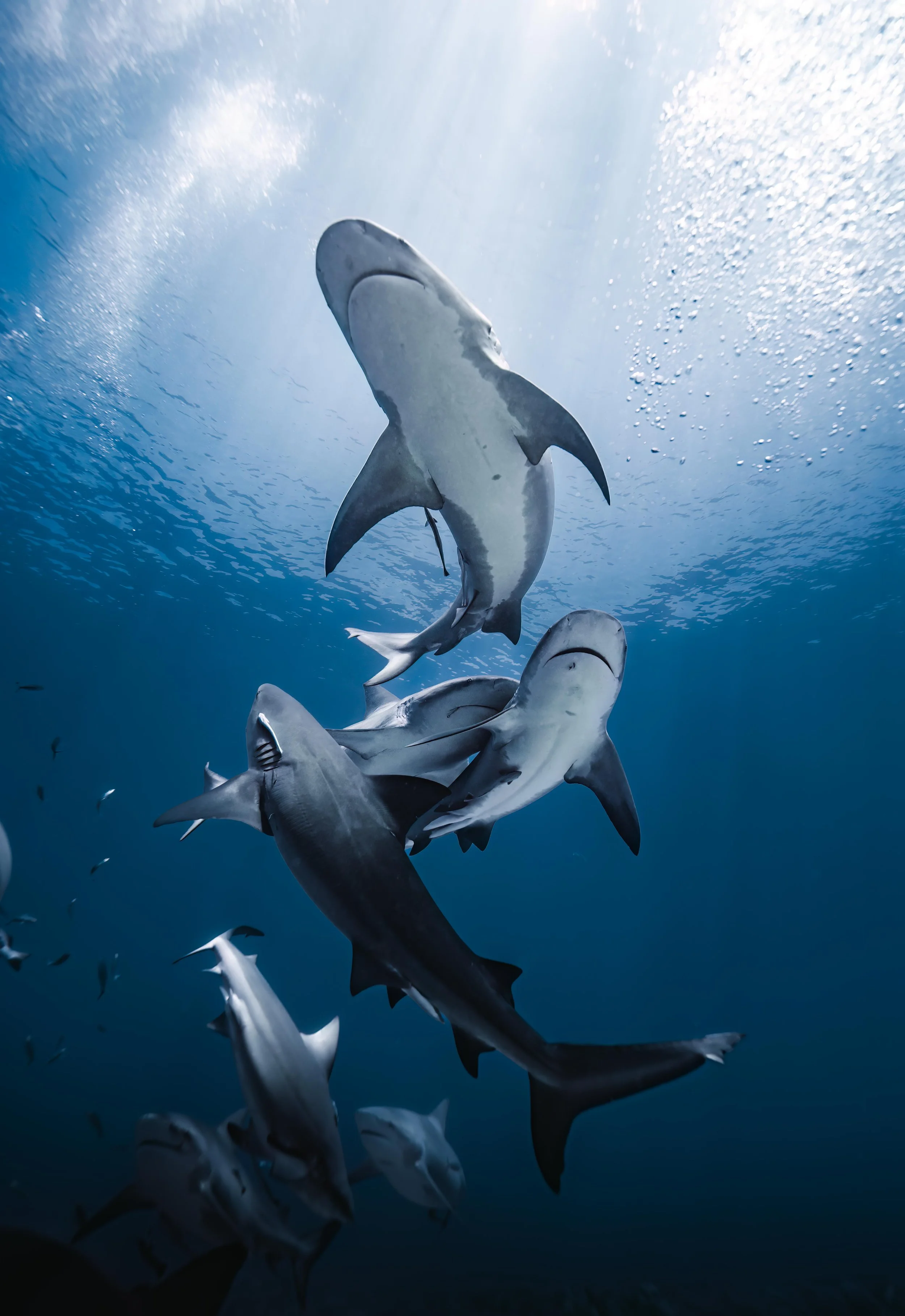
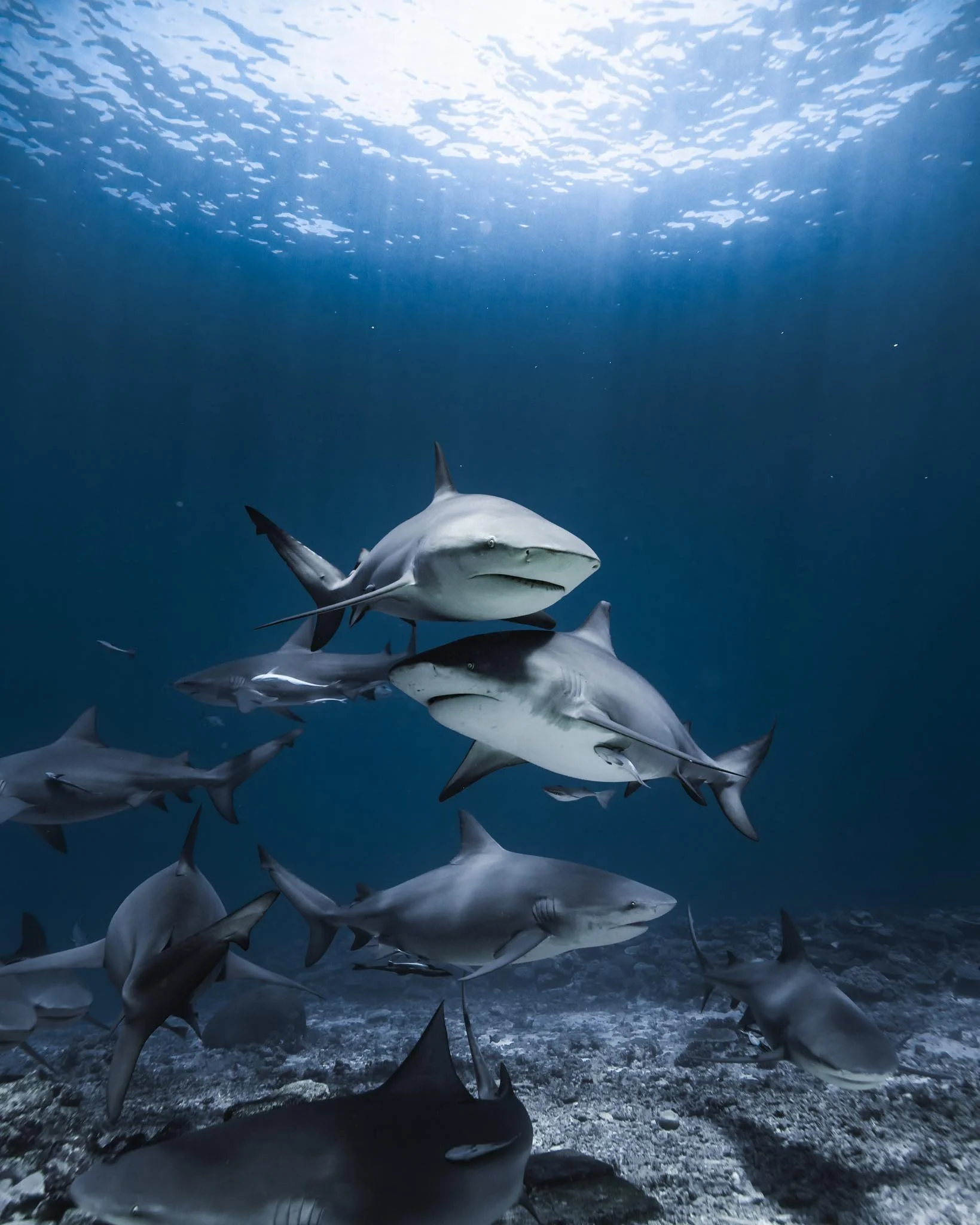
Around 20 bull sharks swimming in front of me.
And just like that, all my nerves disappeared.
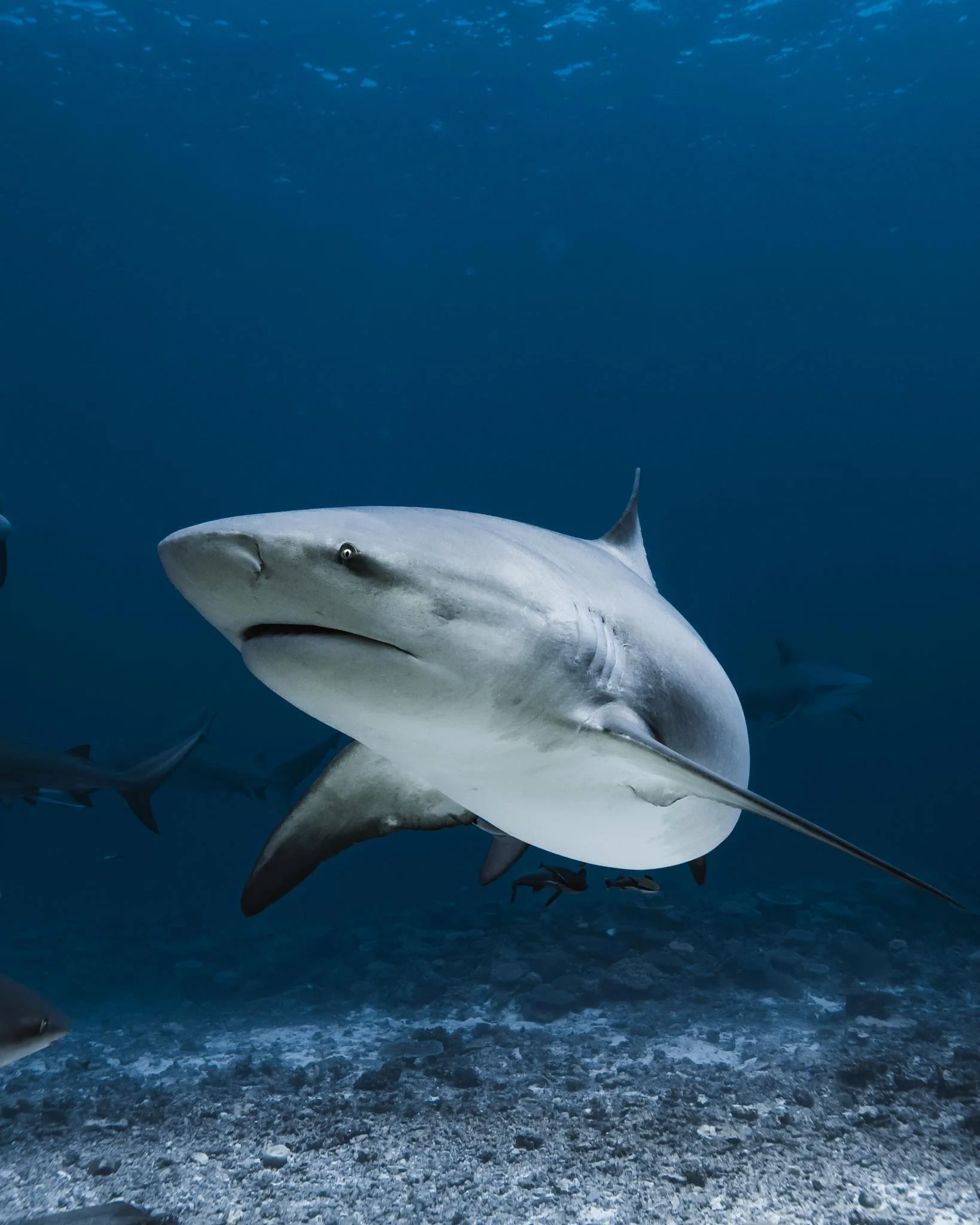
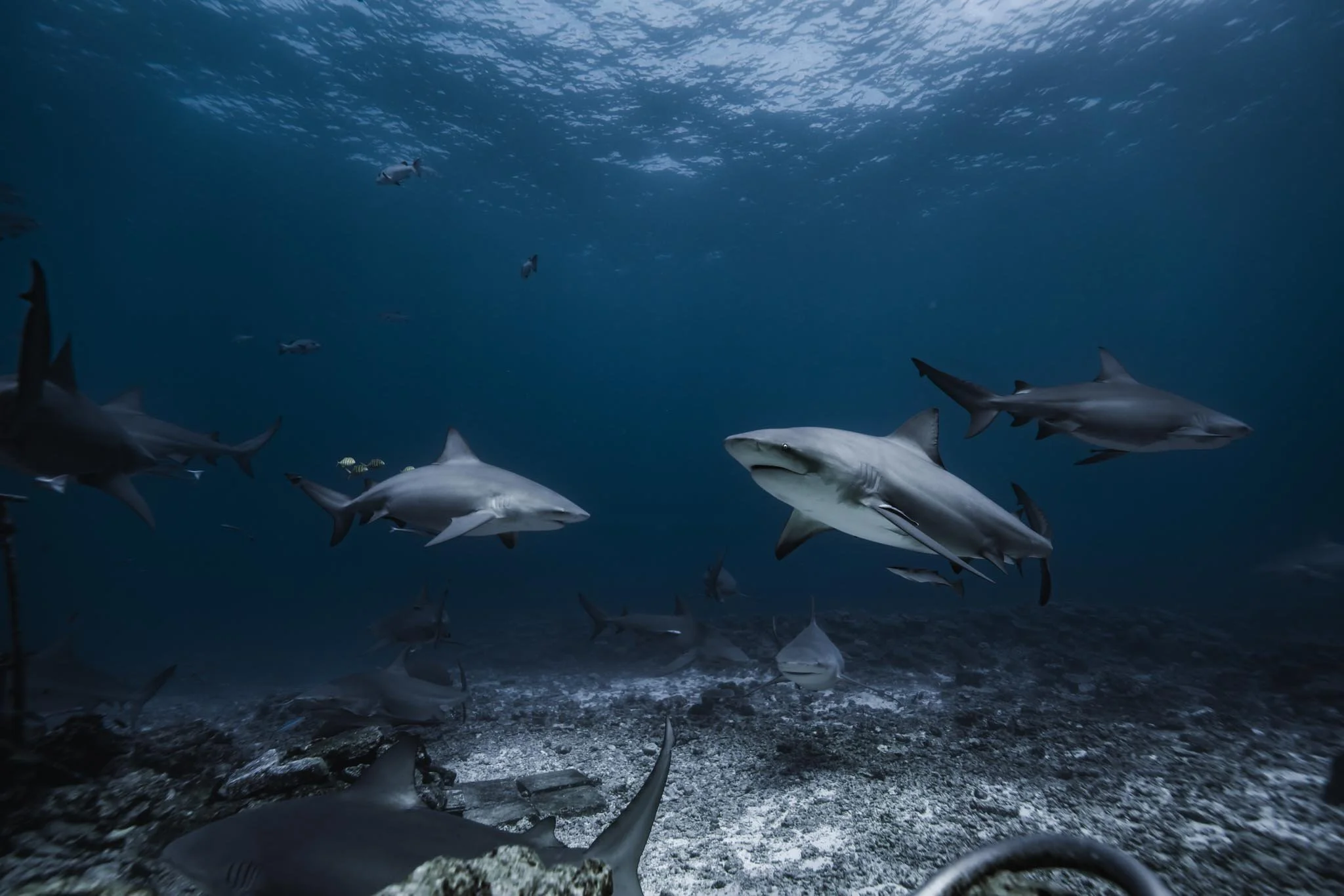
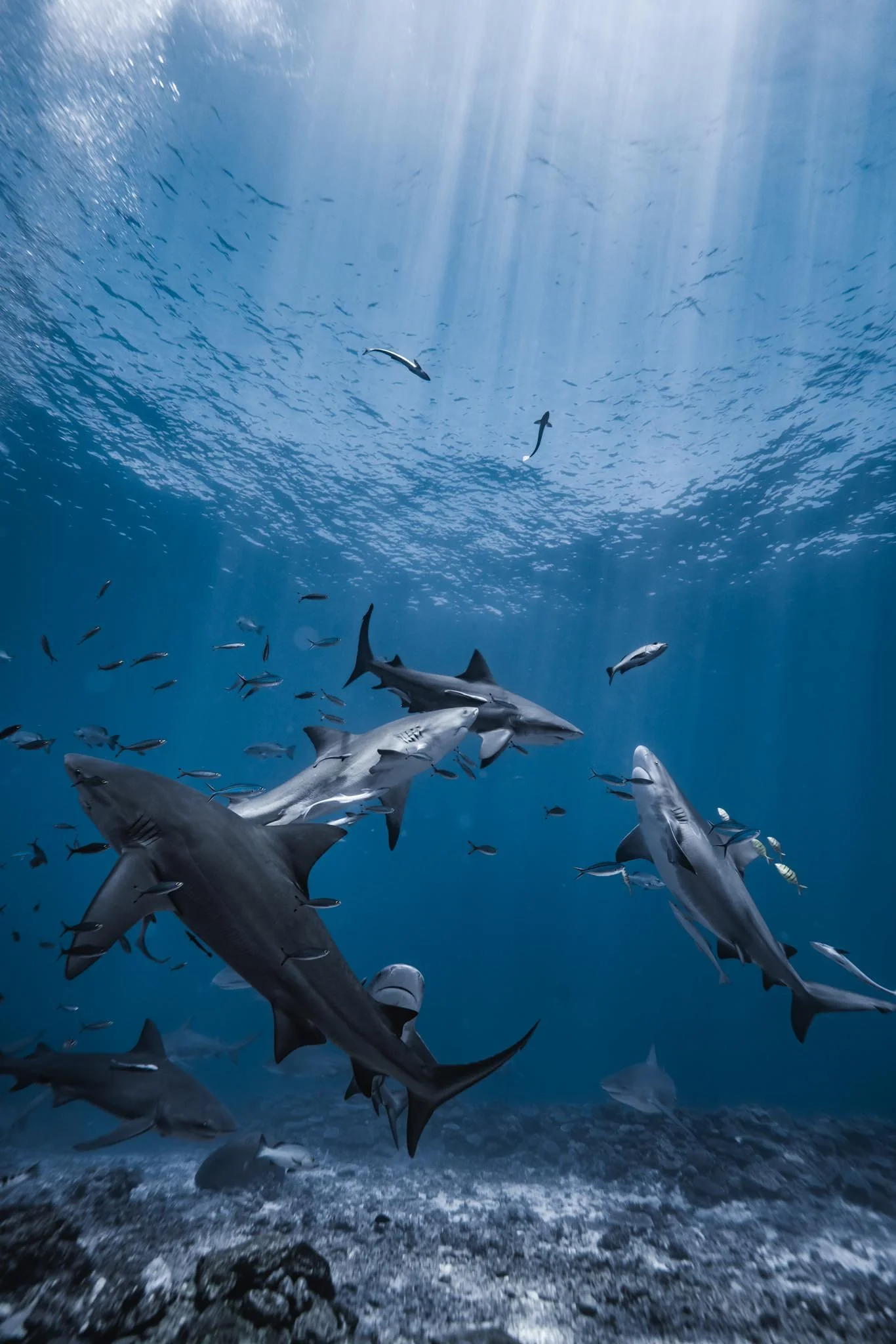
Face-to-face with 20 bull sharks
What an incredible sight.
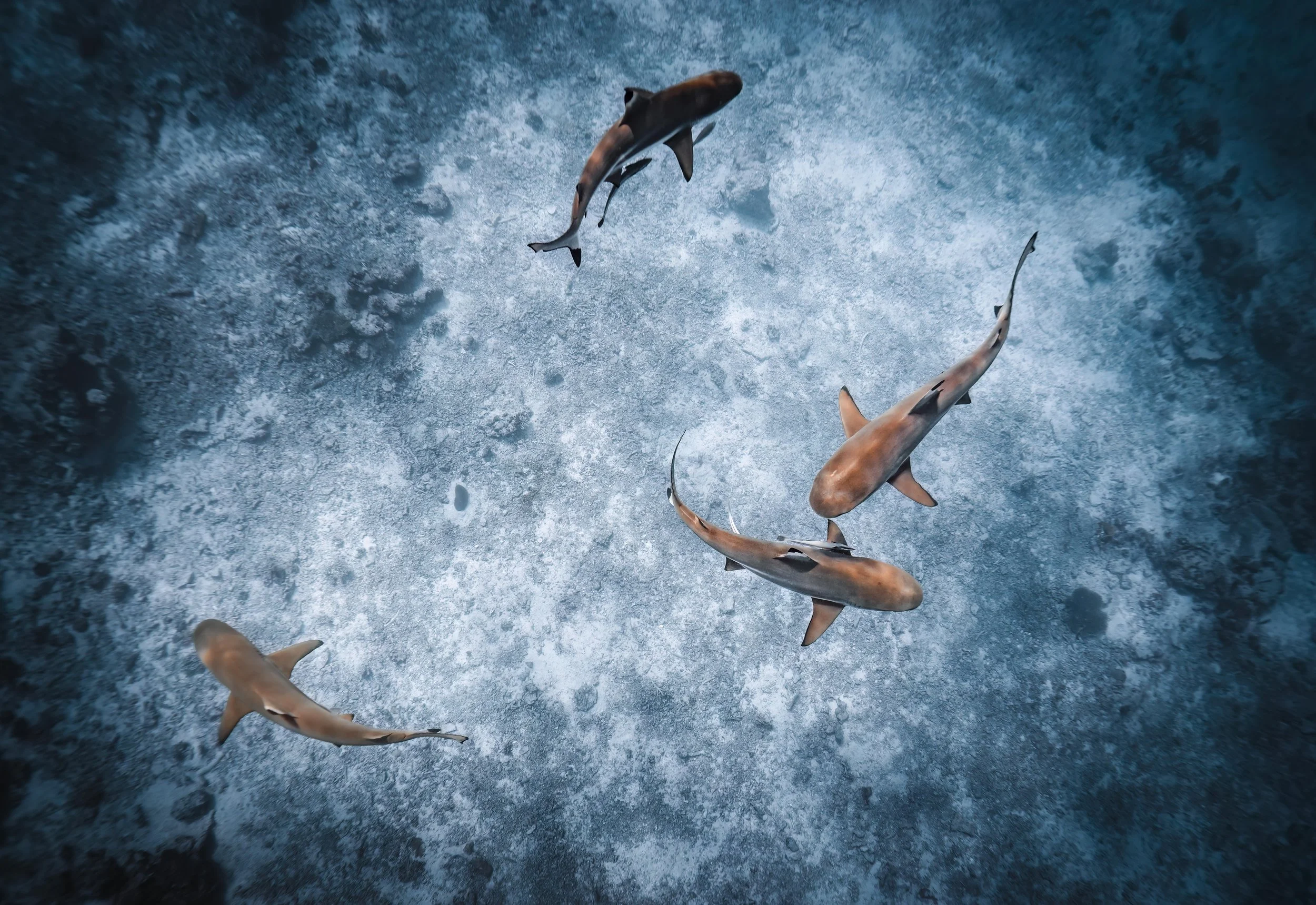
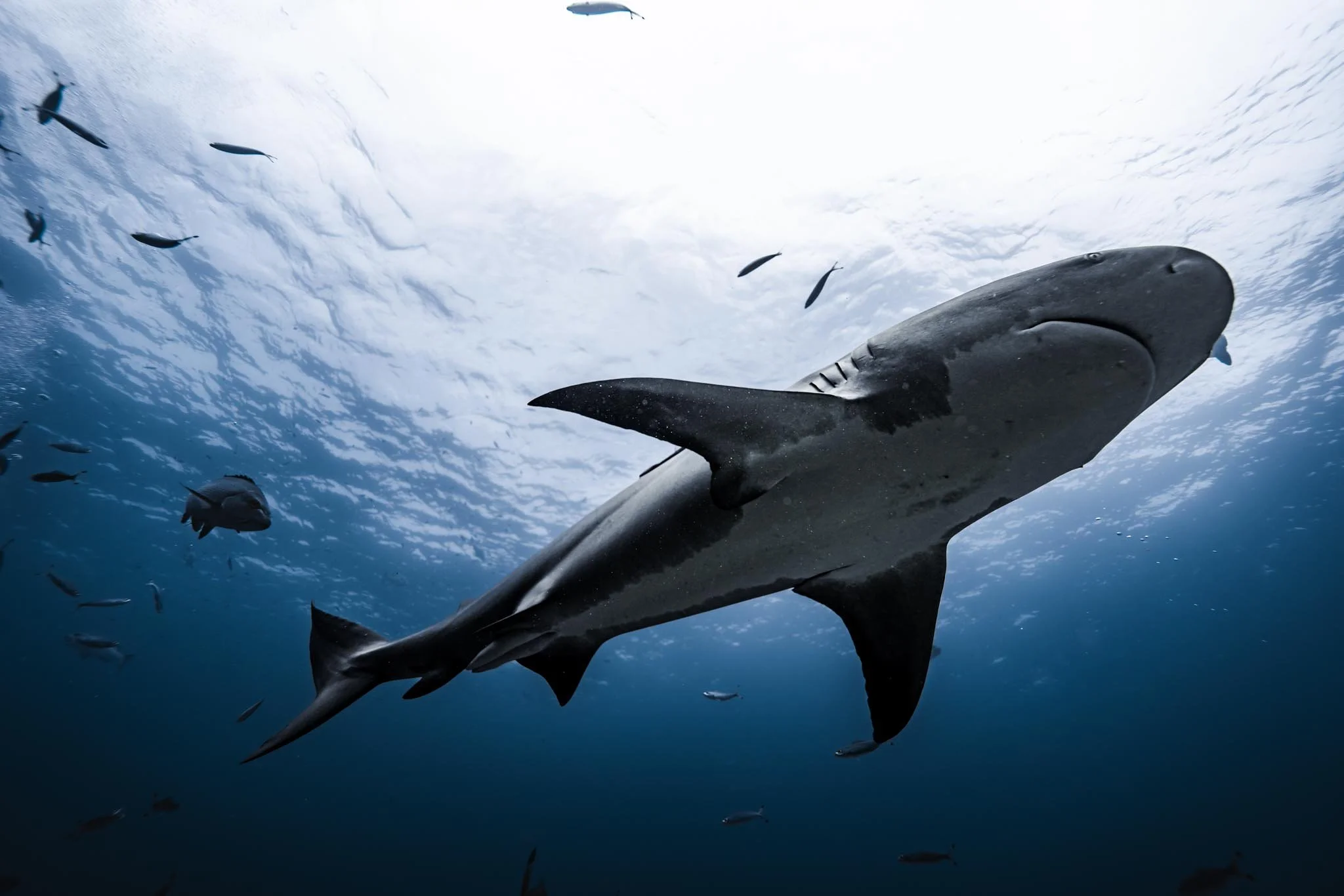
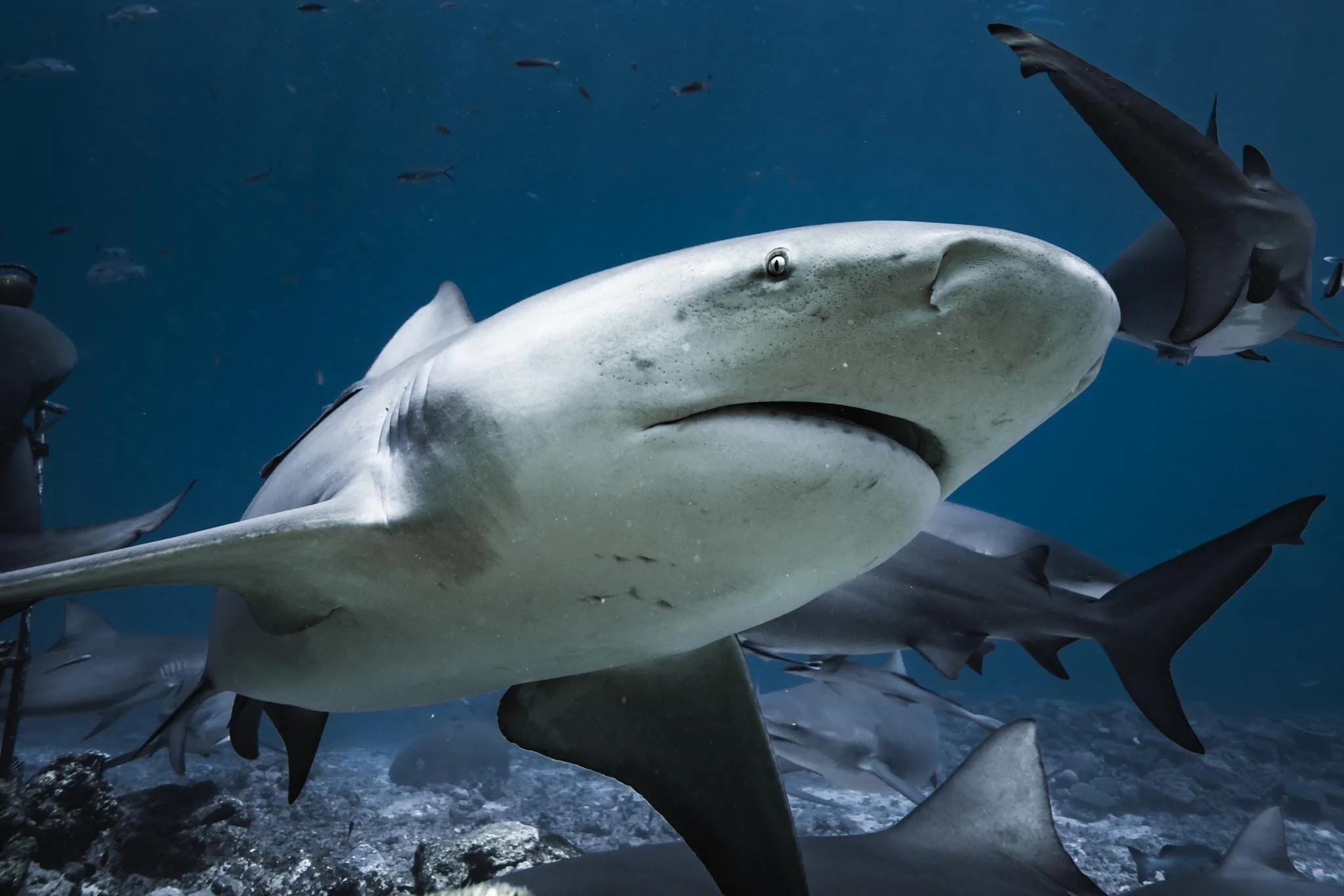
There were bull sharks moving through the water in front of us, gliding past with an effortless confidence that immediately captured my attention. Sometimes they came so close that I had to duck my head as they swam overhead.
And remember, this was completely cage-free.
There was only a small rock wall between us and the sharks. We were simply divers in their environment, observing them as they moved around us.
Despite everything I'd watched and read, nothing compared to seeing these animals in person.
Because the sharks were so close, I could see details I'd previously only learnt about in books and documentaries. I could make out their ampullae of Lorenzini, the sensory organs that help sharks detect electrical signals, and their lateral lines, which help them sense movement and vibrations in the surrounding water. I could even distinguish males from females.
Having spent so much time learning about sharks beforehand made the experience even more fascinating. Rather than seeing a frightening silhouette in the water, I was able to appreciate the incredible adaptations that make them such effective predators.
I was also very aware of their size, strength and power. Feeling comfortable around sharks doesn't mean forgetting what they are capable of. For me, it means understanding them, respecting their space and appreciating that I was a visitor in their world.
The sharks weren't interested in us in the way I had imagined they might be. They continued moving through the water while we watched, and I was completely captivated.
It was one of those experiences where you wish you could pause time for a little longer.
As soon as I got back onto land, I knew I wanted to do it all over again.
After reassuring my parents that I was alive and well, I booked another dive for the following day.
Apparently, one encounter with 20 bull sharks just wasn't enough!
There was one more little surprise waiting for me after that first dive. My guide had noticed that one of the bull sharks had lost a tooth and, without me even realising, had collected it for me afterwards. It was such a thoughtful gesture, and I knew I wanted to turn it into something I could keep as a reminder of the experience.
Back home, I took the tooth to a jeweller in Hervey Bay who has created many of my ocean-themed pieces. They made me a necklace featuring the shark tooth alongside a blue opal, which represents the ocean to me. I wear it constantly, so everyday I'm reminded of that first dive, the moment I looked up from the ocean floor and found myself surrounded by bull sharks, and how quickly my nervousness turned into absolute fascination.
It's more than just a piece of jewellery, it's a little reminder of why I love the ocean and the animals that call it home.
Why sharks deserve our respect, not our fear
Sharks have long been some of my favourite animals, and experiences like this only deepen my appreciation for them.
Unfortunately, sharks are still widely misunderstood. Their reputation is often shaped by frightening headlines, sensationalised media and the idea that these animals are simply mindless predators waiting to attack.
The reality is far more complex.
Shark bites are serious events, and the fear people feel when someone is injured or killed is completely understandable. But when calls for shark culls follow, I think it's important to look beyond the immediate fear and ask bigger questions.
Why are these encounters happening? Are changes in prey availability, fishing pressure, ocean temperatures or other environmental conditions influencing where sharks spend their time? What do the available data actually tell us about changes in shark activity and the risk to people?
These questions don't always have simple answers, and we need evidence rather than assumptions to understand what is happening.
What we do know is that sharks play important roles in marine ecosystems. As predators, they help shape food webs and contribute to the balance of ocean life. Yet around 100 million sharks are killed by humans every year, particularly through fishing, and many populations face significant pressure.
I find it difficult to reconcile how quickly we can turn against an animal because it poses a perceived threat to us, while overlooking the enormous impact our own activities have on the ocean.
Spending time underwater changes your perspective. You see sharks moving through their environment, behaving like the wild animals they are, rather than the frightening characters they're so often portrayed as.
That doesn't mean sharks are harmless, or that we should ignore the risks of entering the water with them. It means we can acknowledge those risks while still respecting their place in the natural world.
We share the ocean with these animals. Understanding them is a far better starting point for protecting both people and sharks than simply treating them as something to fear.
Until next time, Fiji
My week in Fiji gave me so much more than my first shark dives.
I explored beautiful coral reefs, watched marine biologists working to restore them, survived my first triggerfish encounter and met wonderful people while travelling solo.
But the bull sharks were undoubtedly the highlight.
I had arrived in Fiji thinking that, after swimming with humpback whales, my next wildlife encounters would feel a little smaller. Instead, I found myself face to face with one of the ocean's most powerful predators and wanting to jump straight back in for more.
It was a reminder that the more we learn about wildlife, the more we can appreciate it beyond the fear and misconceptions that often surround it.
I went to Fiji excited to dive with sharks. I left with an even greater respect for them, a camera full of memories and absolutely no regrets about booking that second dive.
I have a feeling this won't be my last visit.