
Some places stay with you long after you leave, and Lady Elliot Island is one of those places for me.
I've been lucky enough to visit a few times now, and somehow, every trip feels magical in its own way. From mornings spent surrounded by manta rays to unexpected encounters with camouflaged sharks, rare turtles and curious whales, there's always something new waiting beneath the surface.
It's one of those rare places where you can simply walk off the beach, swim out to the reef and find yourself immersed in an incredible underwater world. And no matter how many times I visit, I never feel like I've seen it all.
My first visit: Birds, mantas and an unforgettable introduction
My first trip to Lady Elliot Island during October 2024, right at the beginning of the bird breeding season. There were birds absolutely everywhere! The island was alive with activity, and it was wonderful to see so much happening both above and below the water.
The reef was just as full of life, and during a private boat tour, we were lucky enough to find and swim with manta rays.
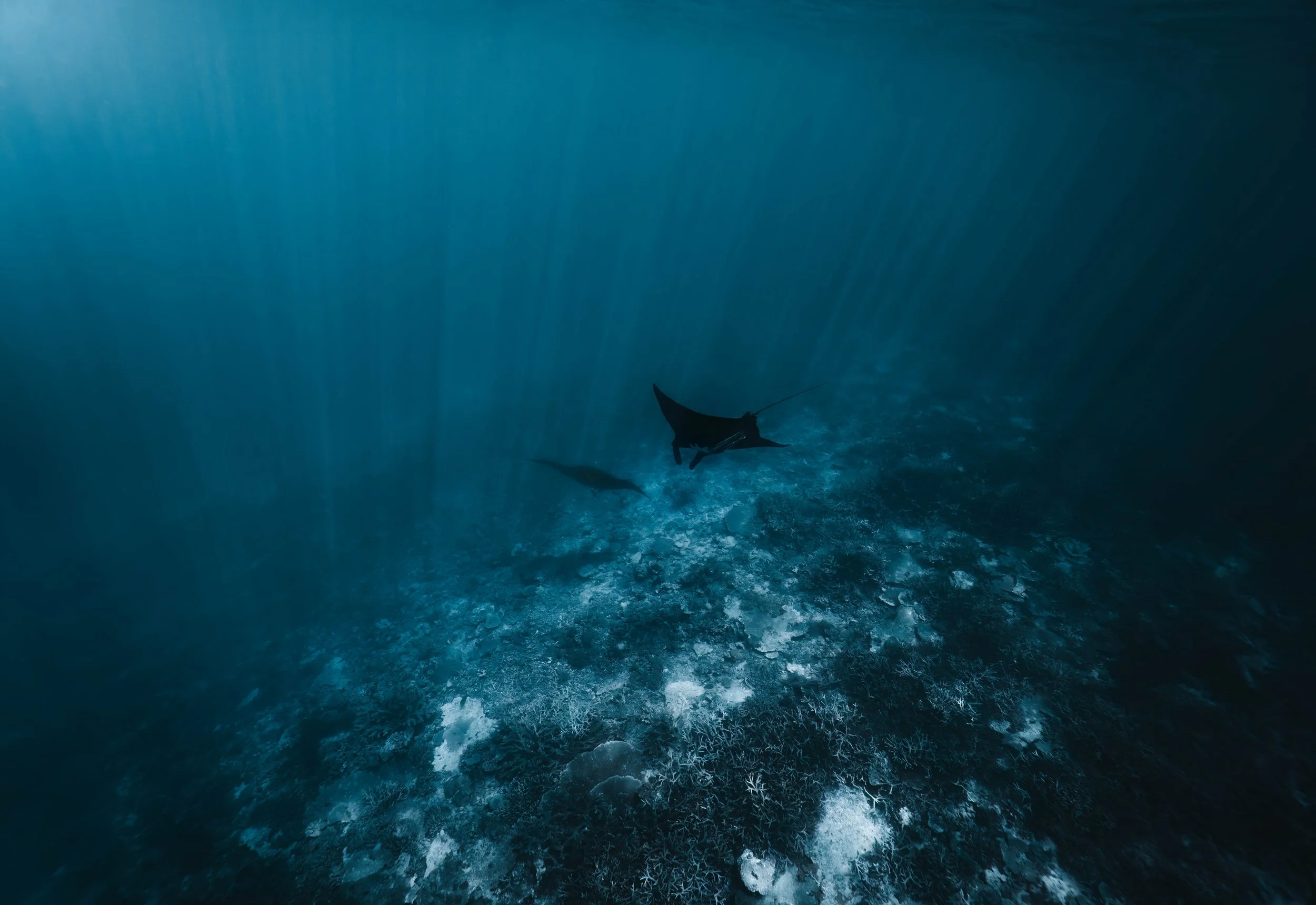
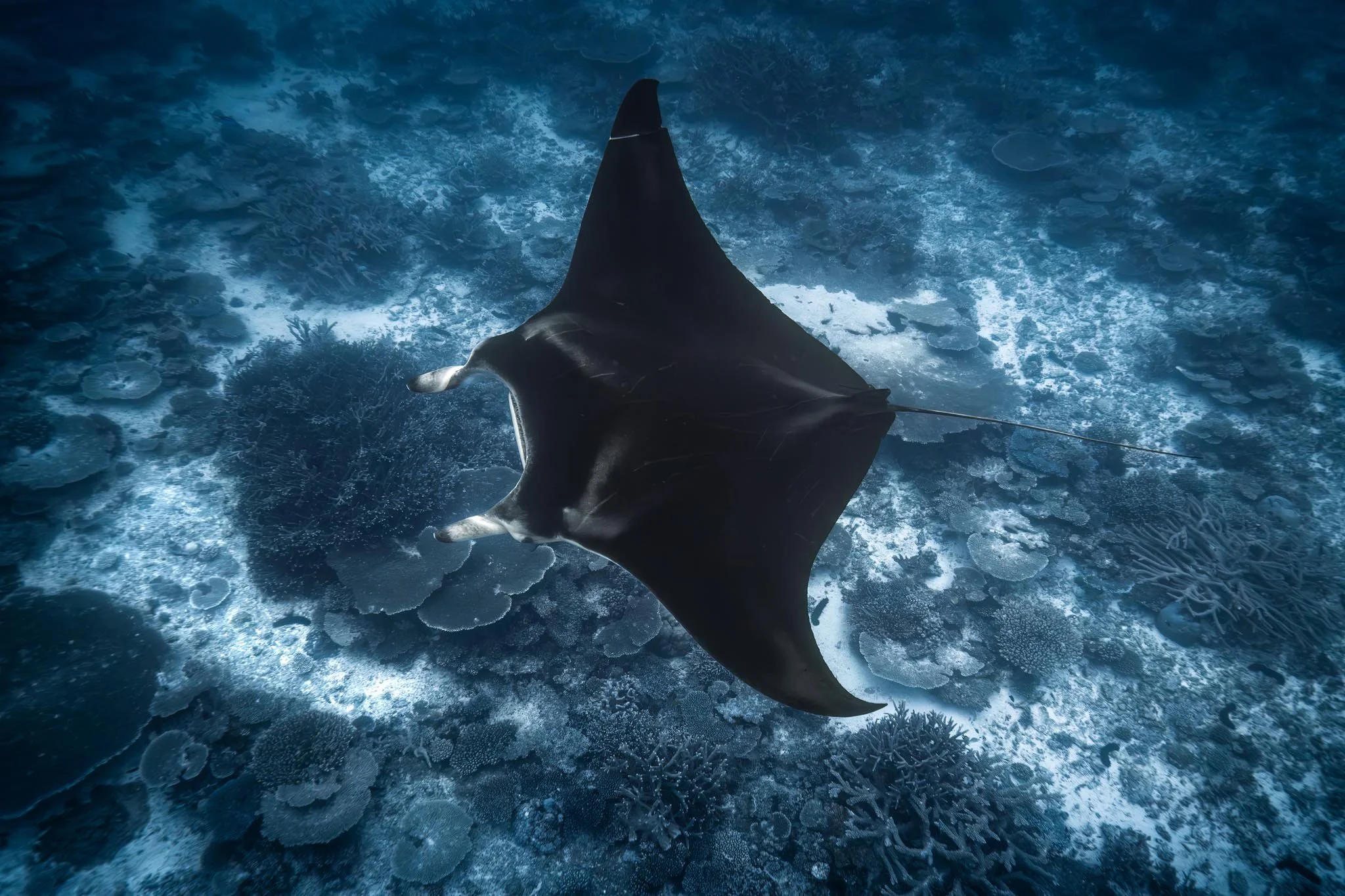
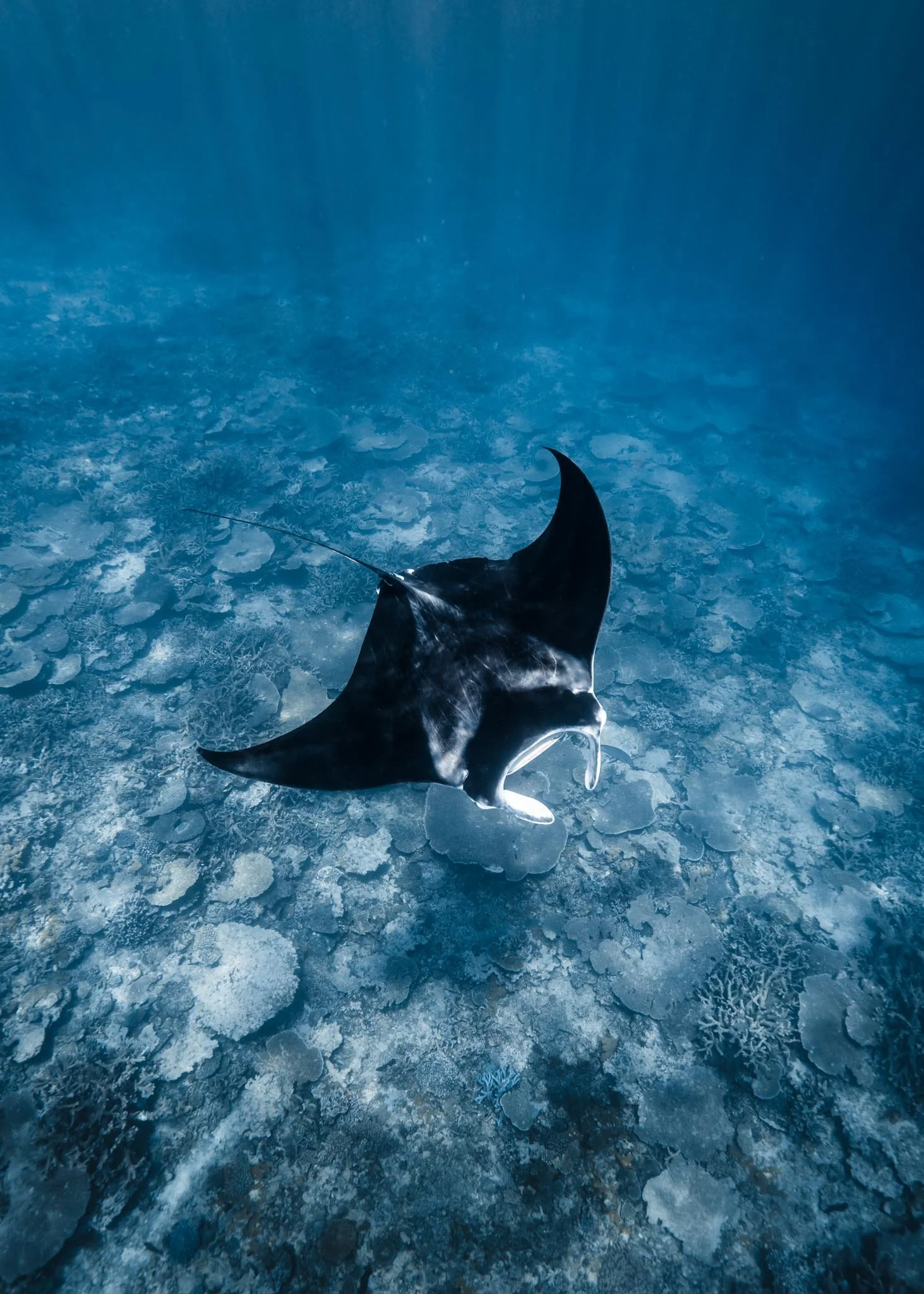
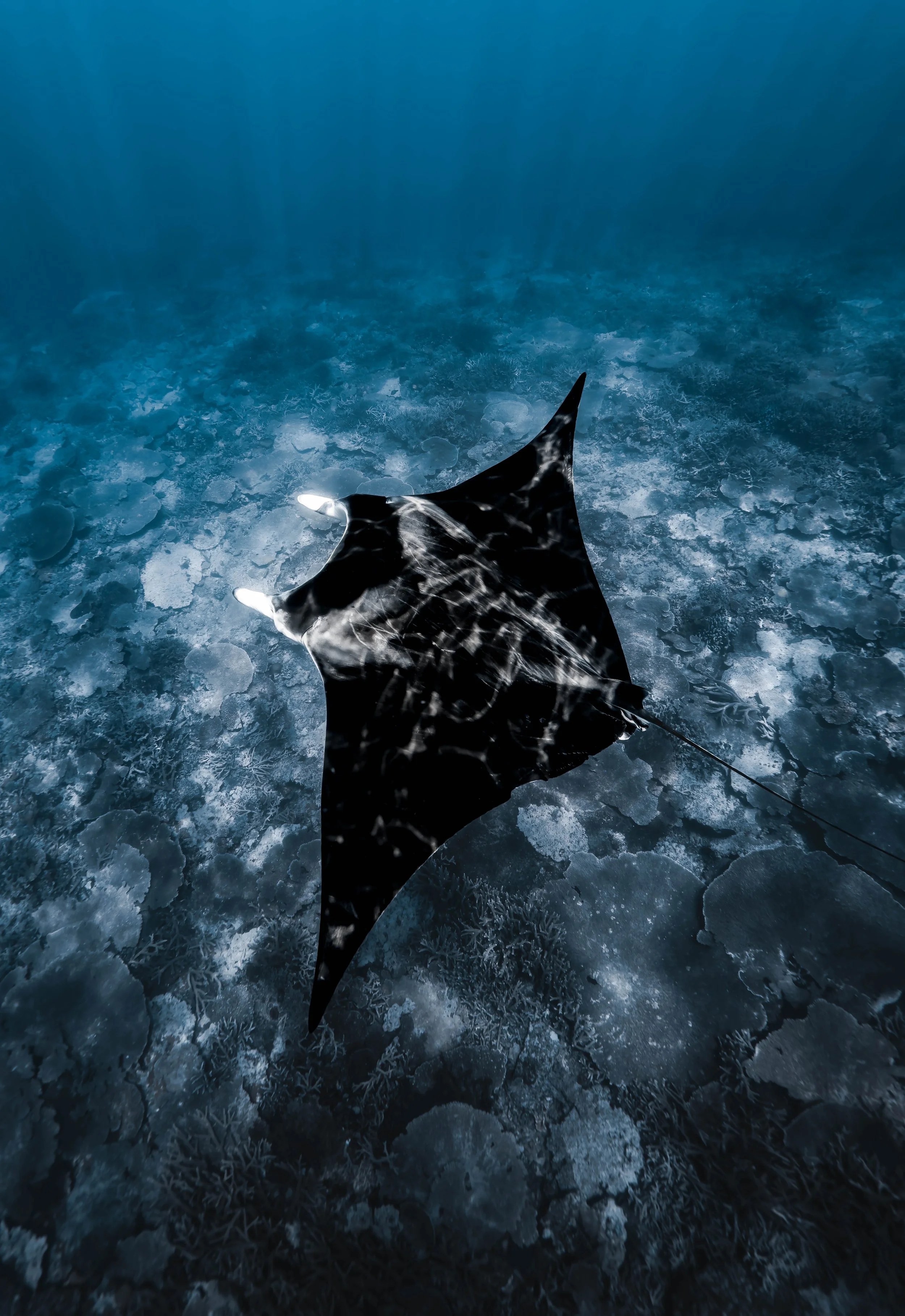
This was my introduction to Taurus, the famous melanistic reef manta ray who has become something of a legend around Lady Elliot Island.
Taurus is almost entirely black, a rare colour variation known as melanism. He's also believed to be the world's oldest known manta ray, with his age estimated at over 50 years. Seeing such a remarkable animal in the wild for the first time was incredibly special.
I've been fortunate enough to see Taurus on every visit since, and he has even made his way into one of my photographic prints. There's something wonderful about being able to photograph an animal like him and share a little of his story with others.
Sunrise swims and manta-filled mornings
Over the last two years, I've visited during peak manta season, which offers a completely different experience.
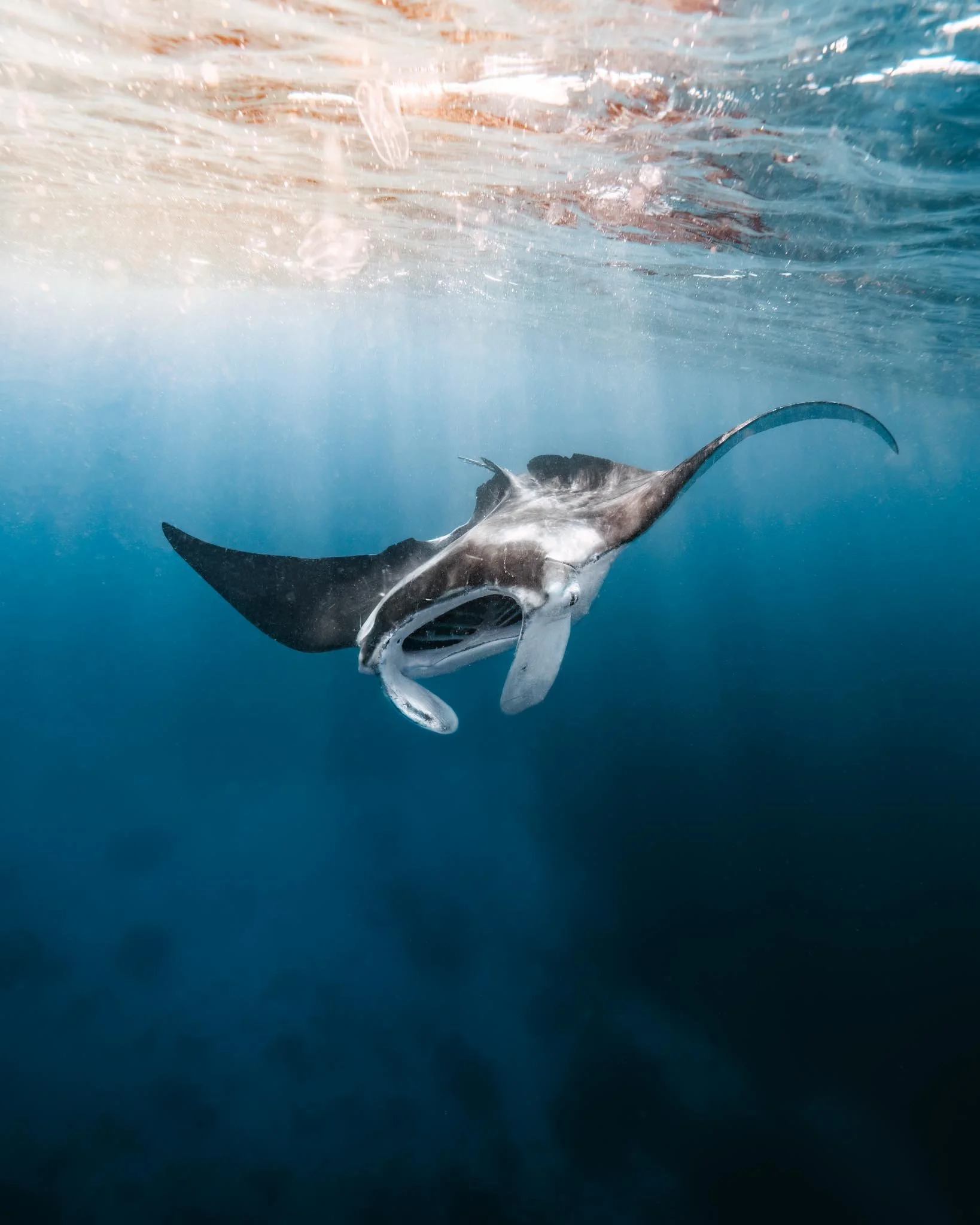
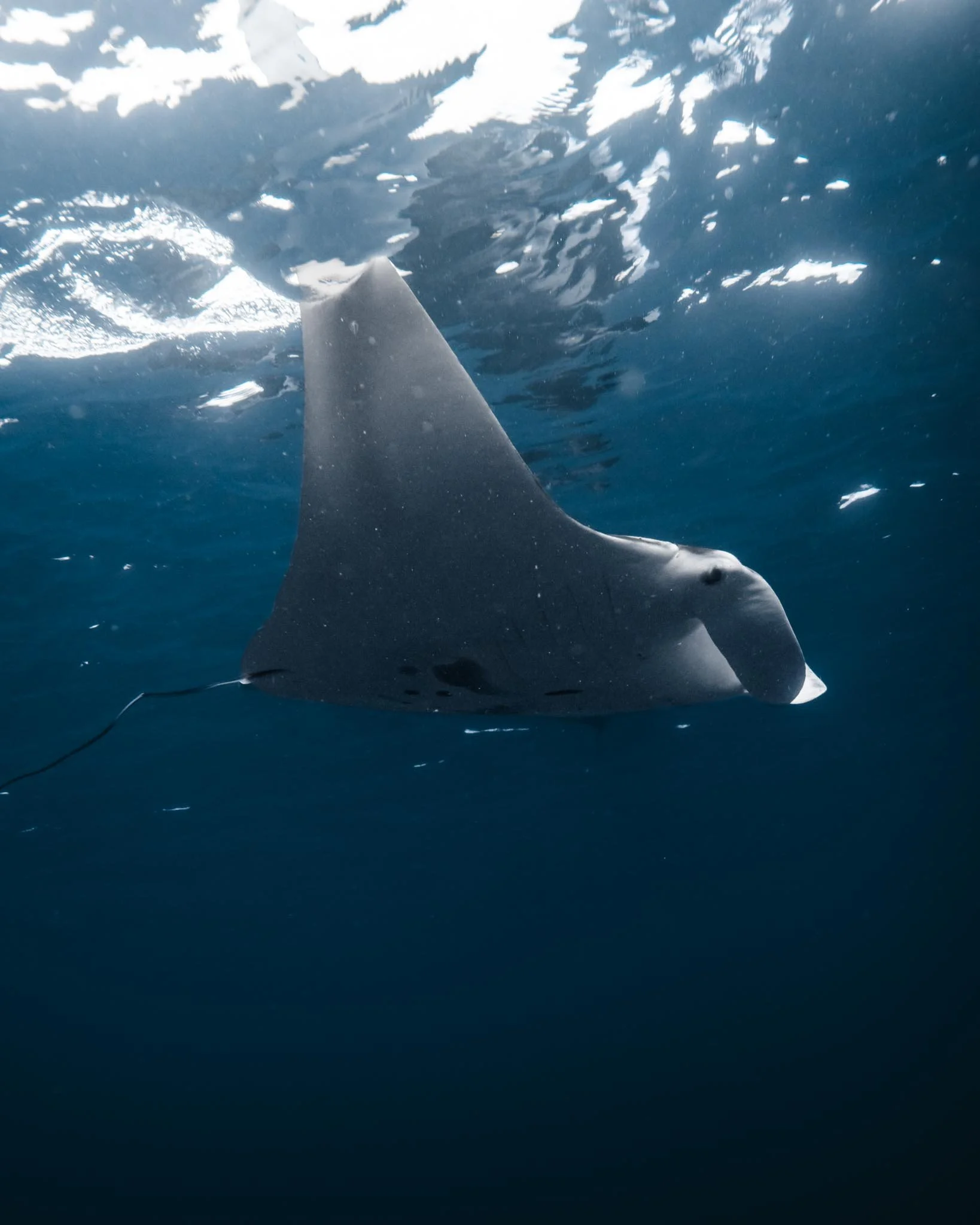
The mornings begin early, heading into the water around sunrise when the ocean is often at its calmest. The goal is to find surface-feeding manta rays or watch them visiting the reef's manta bommies, where they come to cleaning stations to have parasites removed by smaller fish.
Some mornings, there are so many individual mantas that I genuinely lose count.
Watching these enormous animals glide effortlessly through the water never gets old. They can move with such grace, barely seeming to move their wings as they travel through the ocean. One moment you're watching a manta feeding at the surface, and the next another appears nearby.
And the mantas are only part of the magic.
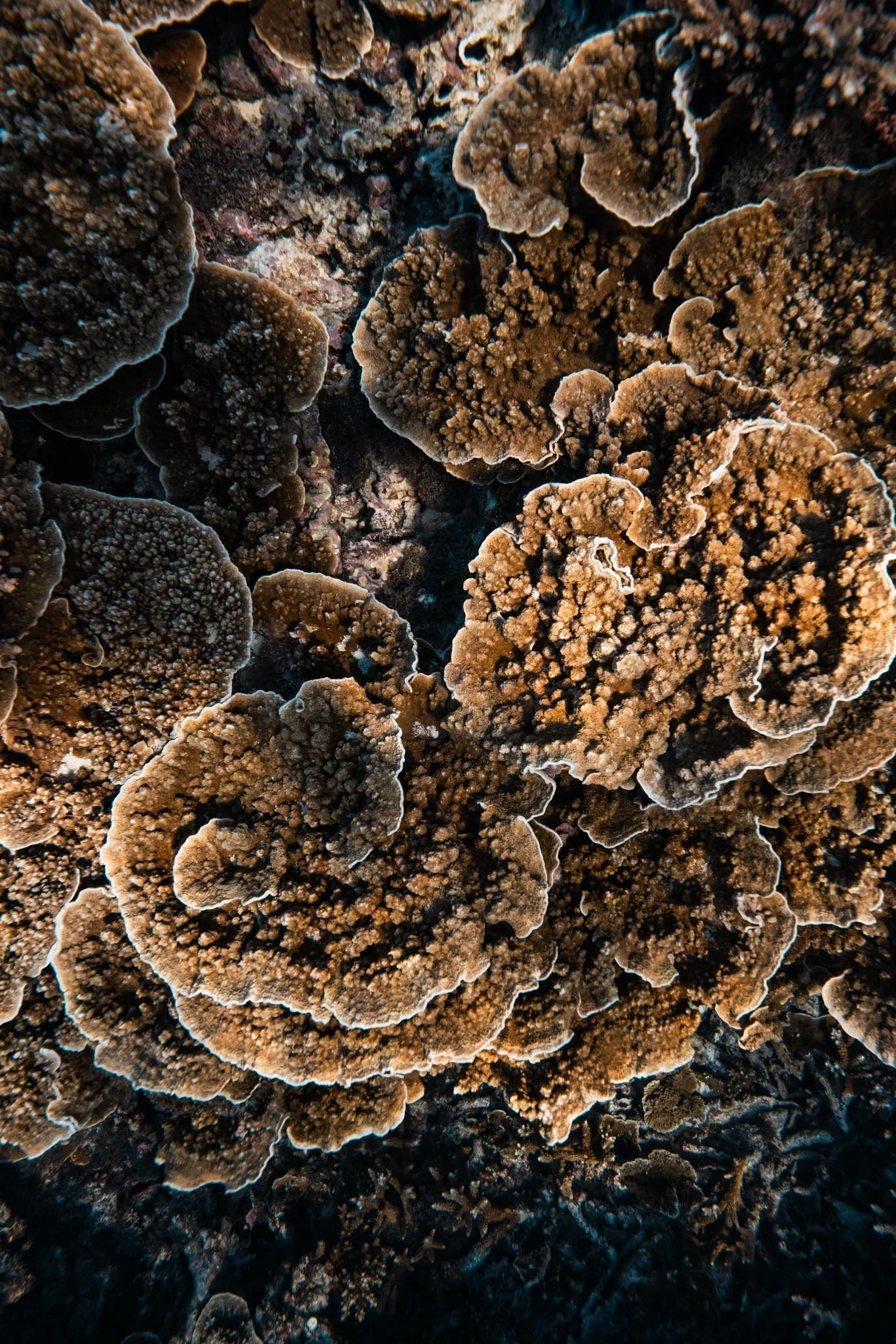
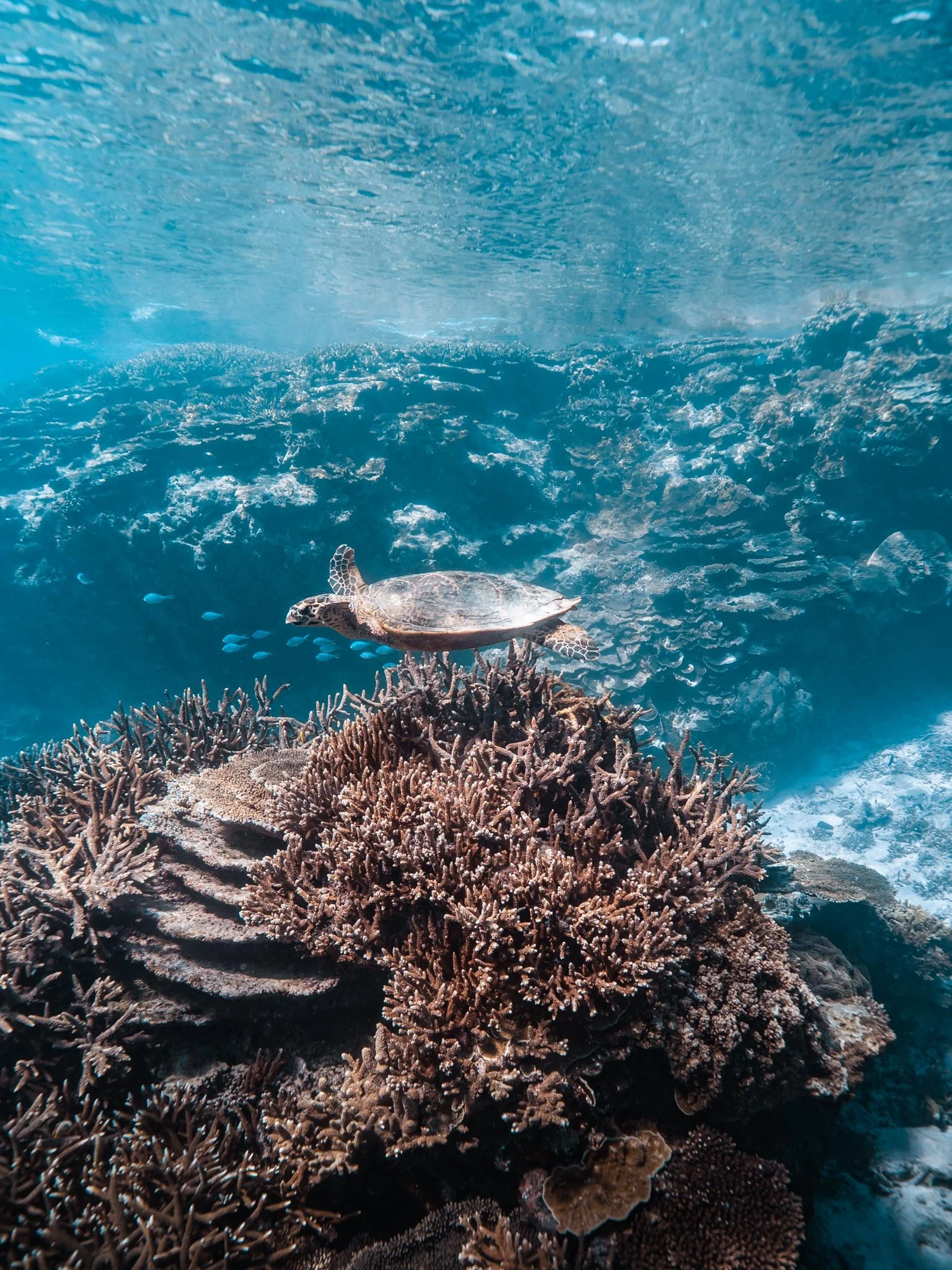
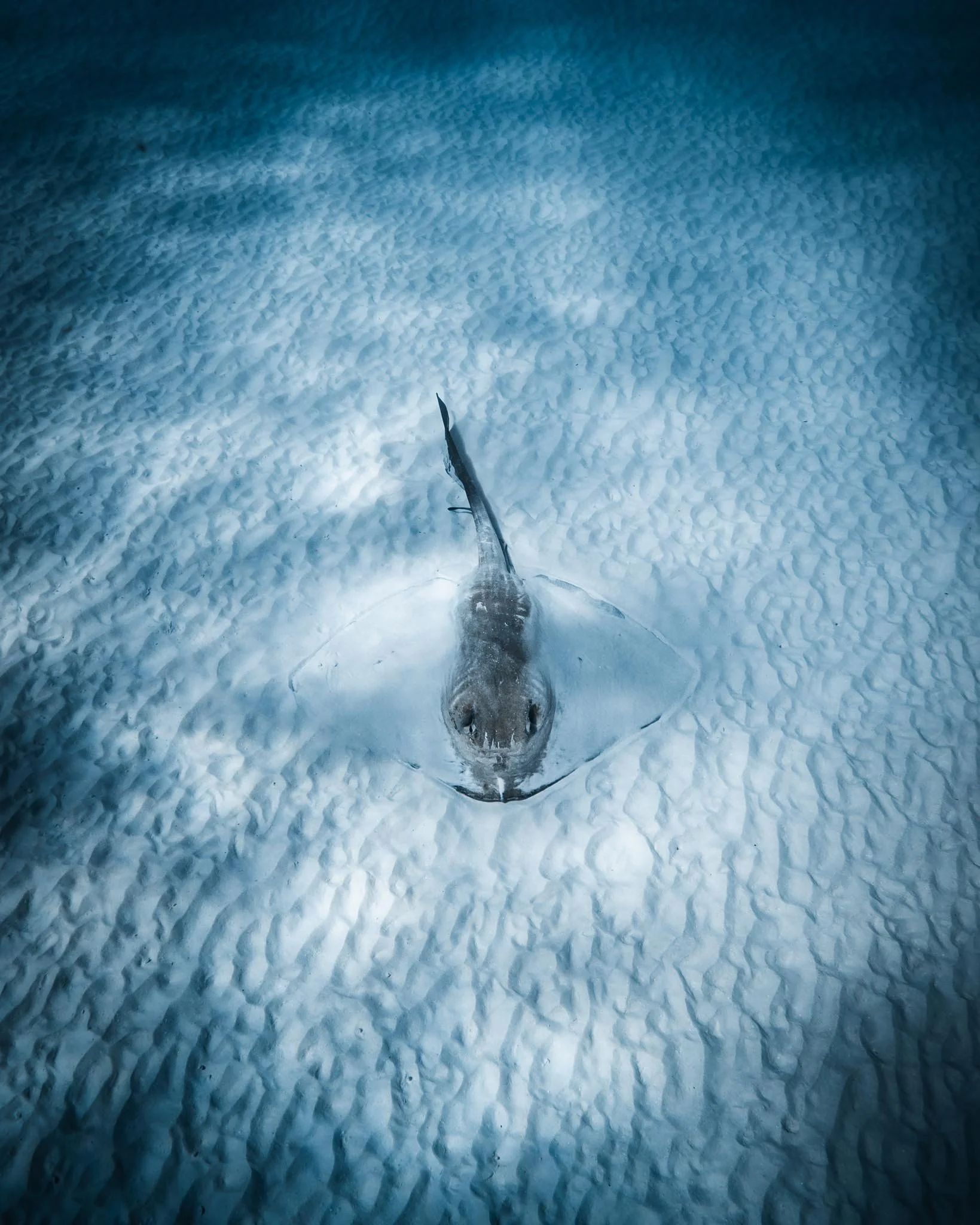
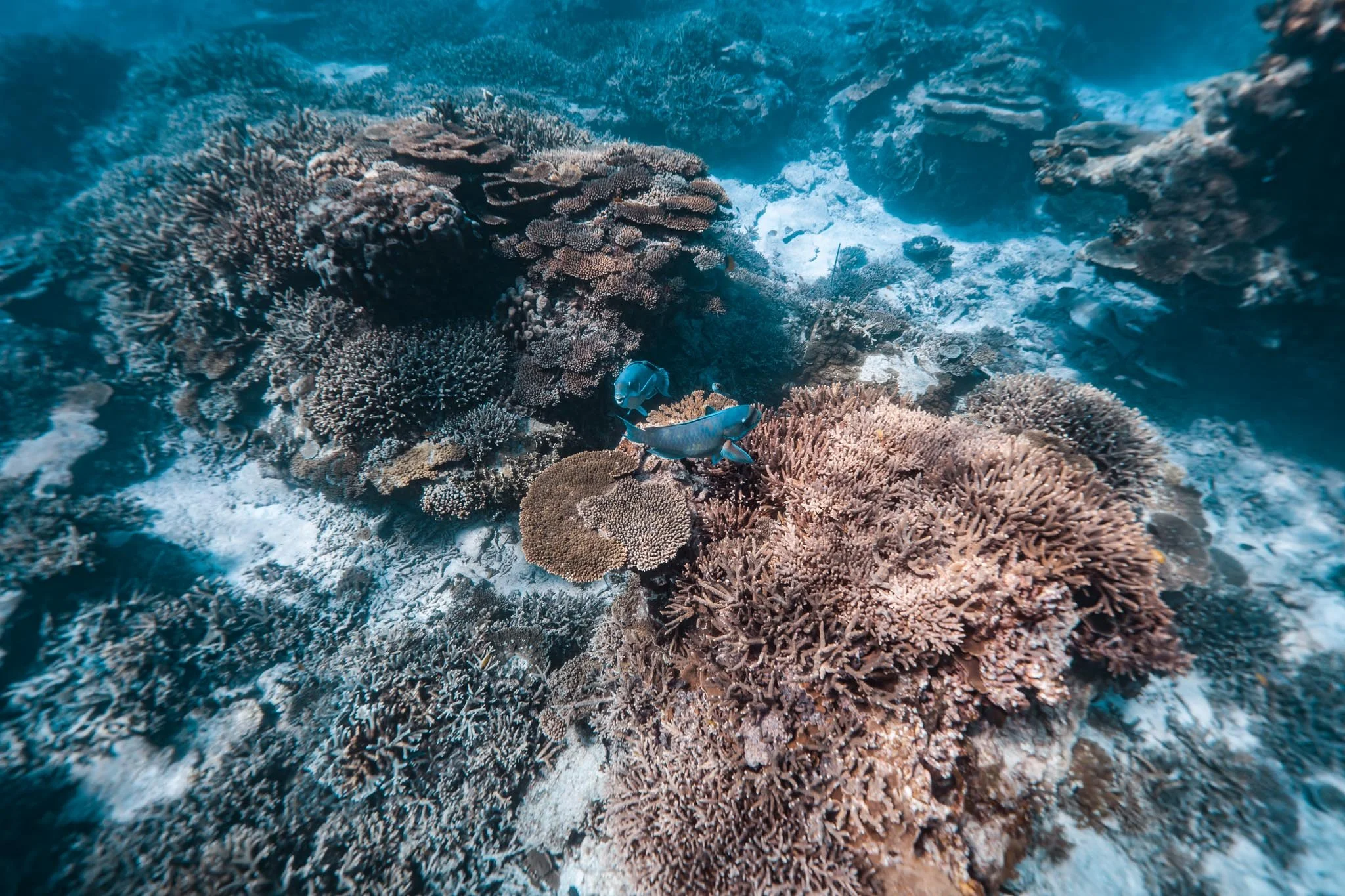
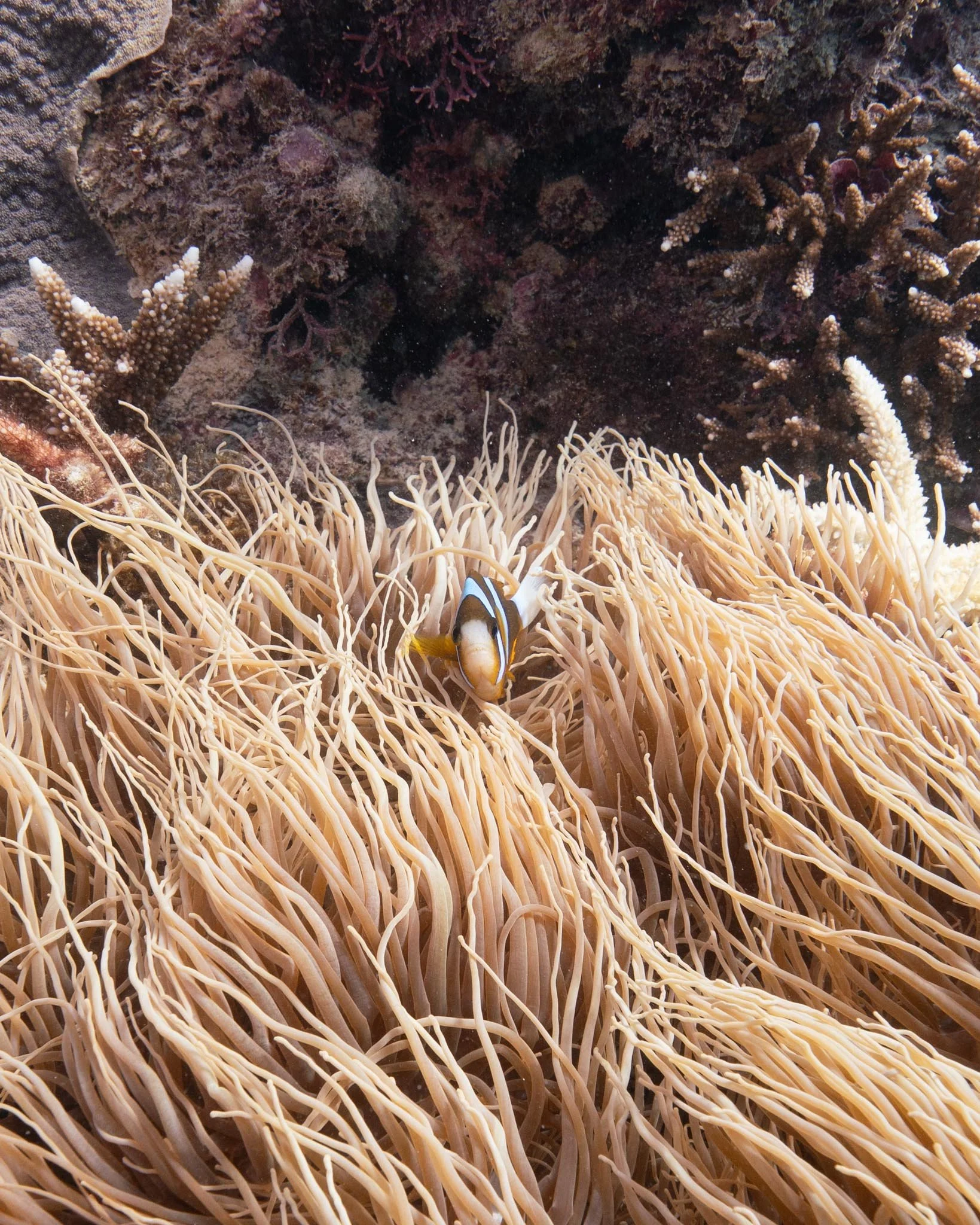
The reef is bursting with life: colourful reef fish, sharks cruising along the coral, and turtles seemingly everywhere you look. There's always something happening, whether you're watching the larger animals or slowing down to appreciate the smaller details of the reef.
It's a place that makes you want to stay in the water for as long as possible.
A little rescue mission (with an ungrateful patient)
One of my favourite memories from my first visit had nothing to do with manta rays.
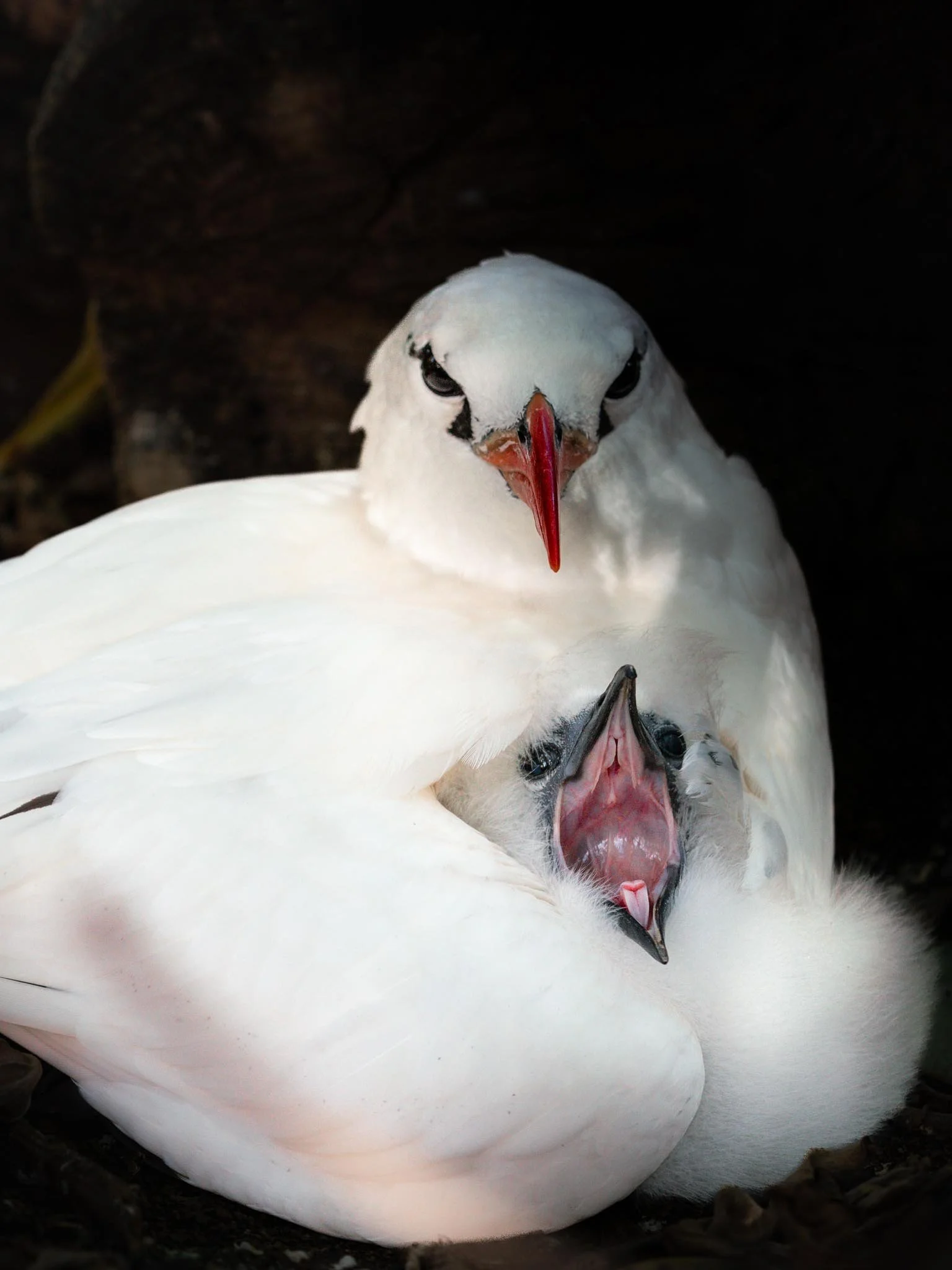
While snorkelling, I spotted a young seabird struggling to stay afloat. It didn't look like it was managing very well, so I carefully picked it up and swam it over to a nearby buoy where it could dry off and hopefully take flight.
Naturally, you'd expect a little gratitude after such a rescue.
Instead, the bird decided to bite my hand. Repeatedly.
Thankfully, after a few minutes of drying off, it flew away under its own steam. I was happy to see it go, even if it wasn't exactly the thank-you I'd been hoping for.
It's a small moment, but one that reminds me how unpredictable wildlife encounters can be. Sometimes you're lucky enough to witness something extraordinary. Other times, you end up with a very unimpressed bird and a few new bite marks.
The things you almost miss
One of the things I love most about Lady Elliot Island is that you never know what might be hiding right beside you.
On one visit, my husband and I were wading out across the sand at low tide. I sat down at the edge of the reef to put my fins on and reached for my camera, which he'd been carrying for me.
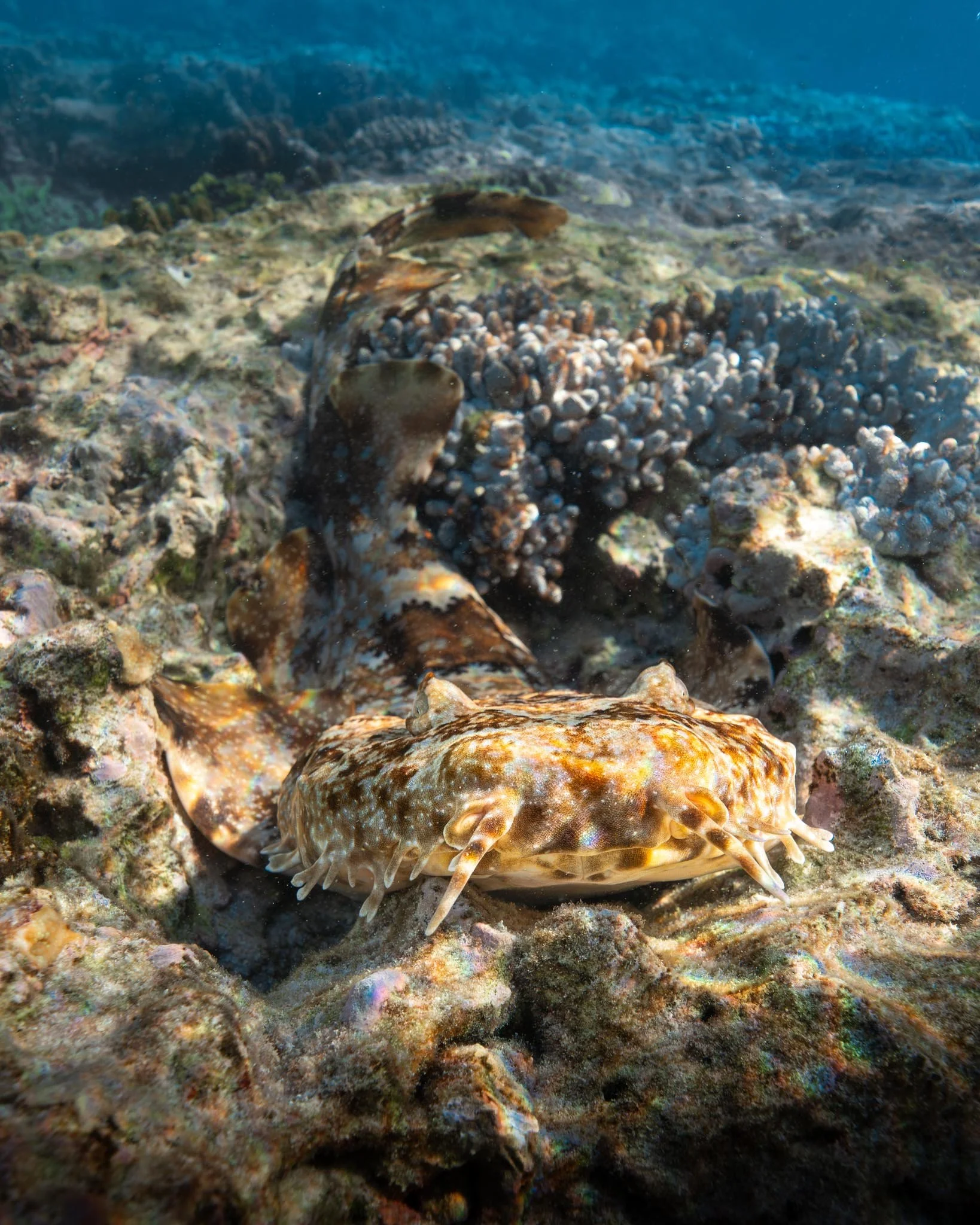
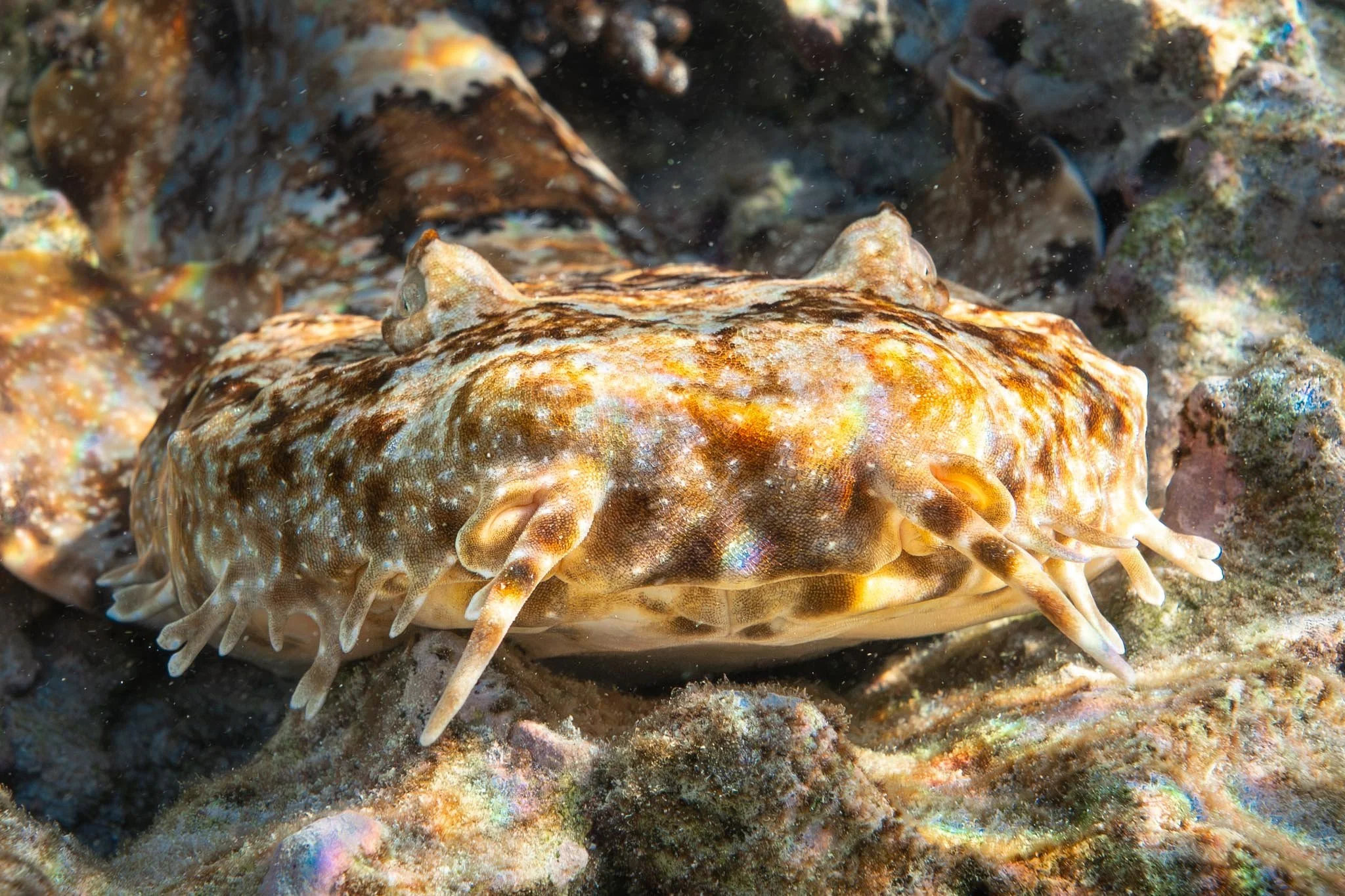
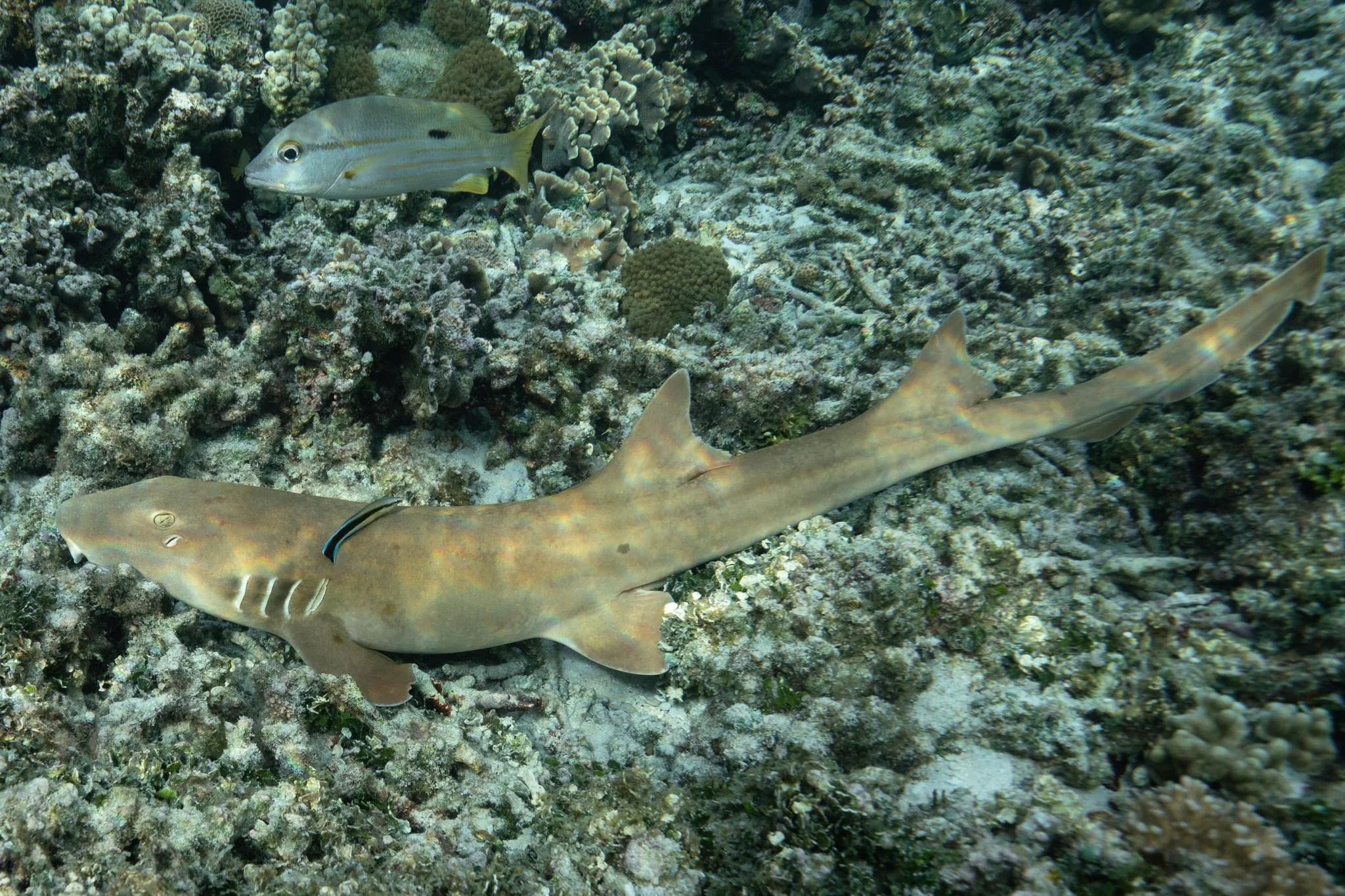
As I put my face underwater, I spotted a wobbegong shark resting right beside him.
It was so perfectly camouflaged against the reef that he hadn't noticed it at all. In fact, he was about to step on it!
Luckily, I managed to warn him in time. It was a very good reminder that when you're exploring the reef, it's worth looking where you're putting your feet. Some of its residents are experts at disappearing in plain sight.
That same morning, we had a very brief appearance from Bubbles, the Indo-Pacific bottlenose dolphin known for his unusual feeding behaviour.
Bubbles has become famous for chasing schools of bigeye trevally until the stressed fish regurgitate their food, then swooping in to eat the leftovers. It's a pretty unusual feeding strategy, and seeing a wild dolphin with such a distinctive hunting technique is a reminder of just how clever and adaptable these animals can be.
He didn't stay long, but that's part of the fun. At Lady Elliot, you don't get to decide what shows up or how long it stays. You just have to appreciate it when it does.
The lagoon and a very special turtle
On the eastern side of the island is the lagoon, a shallow section of reef that's accessible for swimming around high tide.
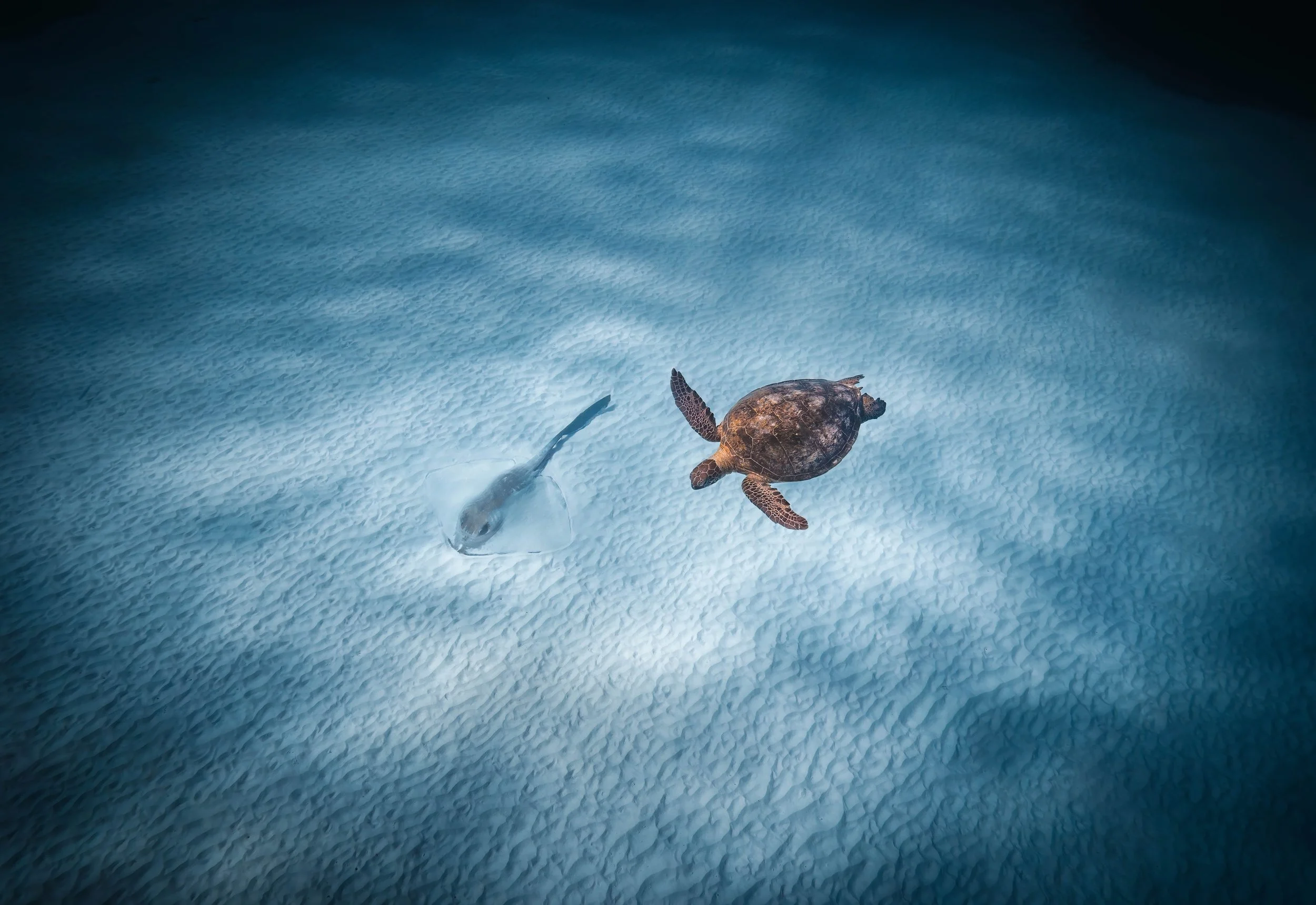
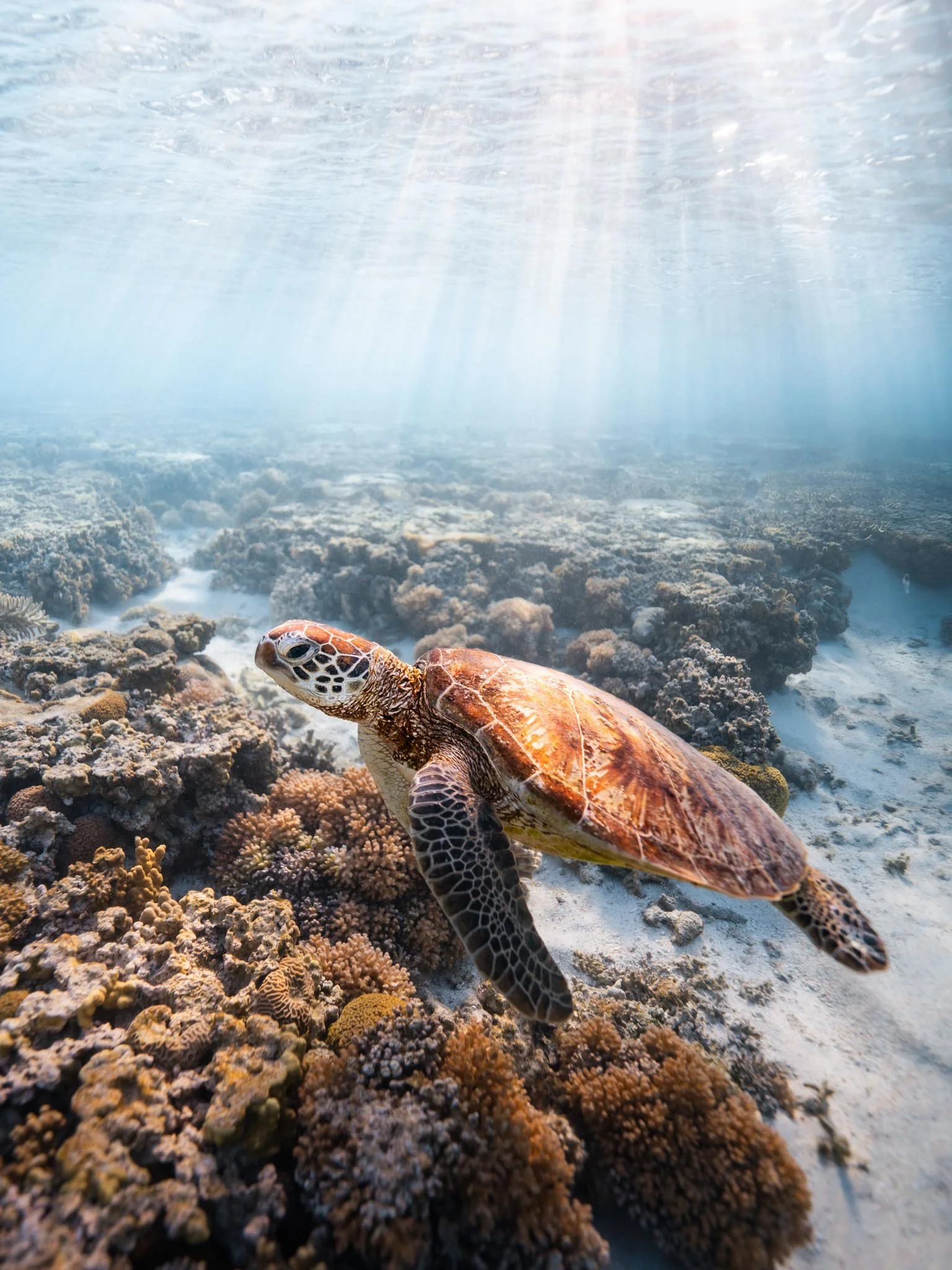
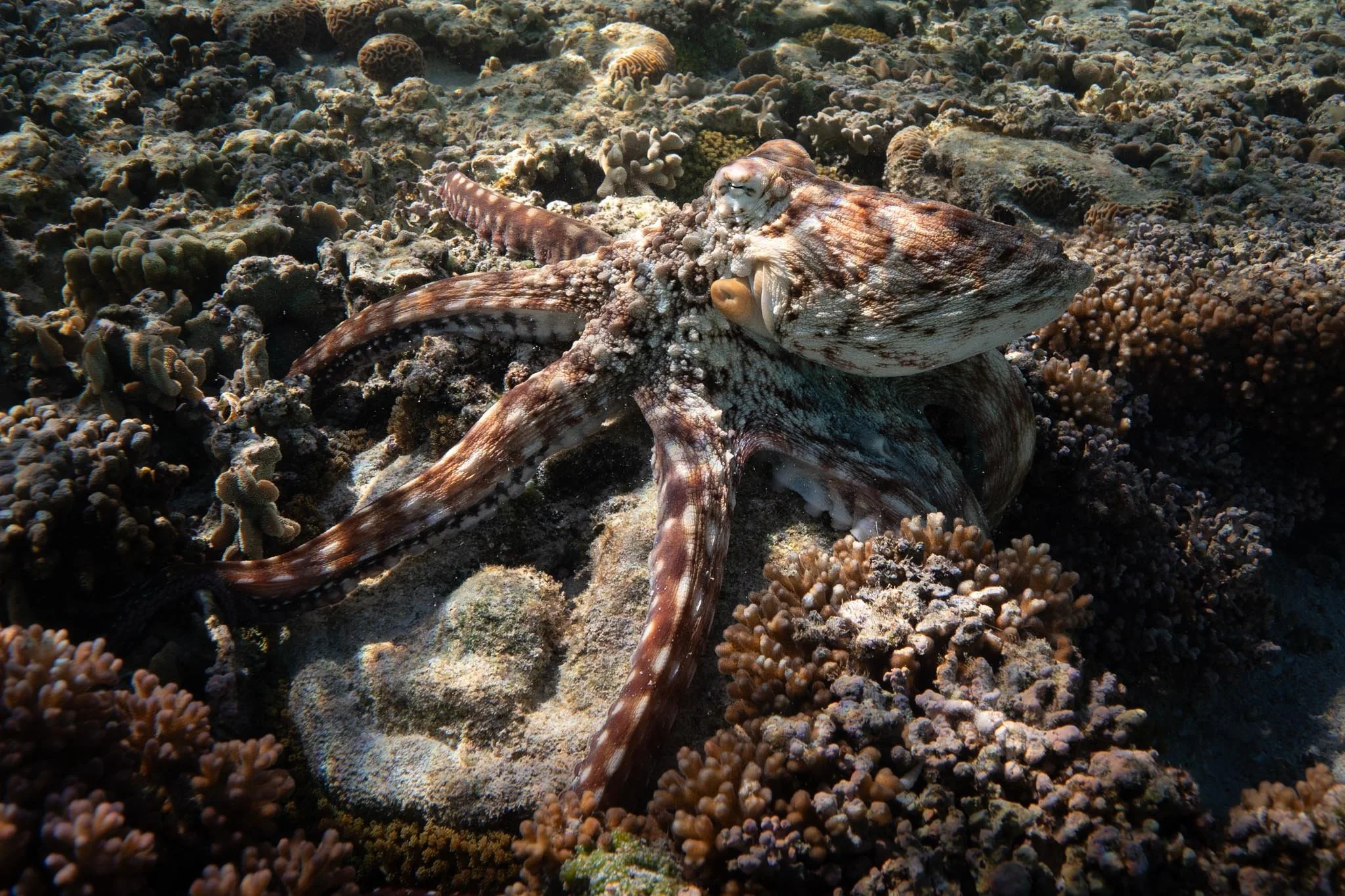
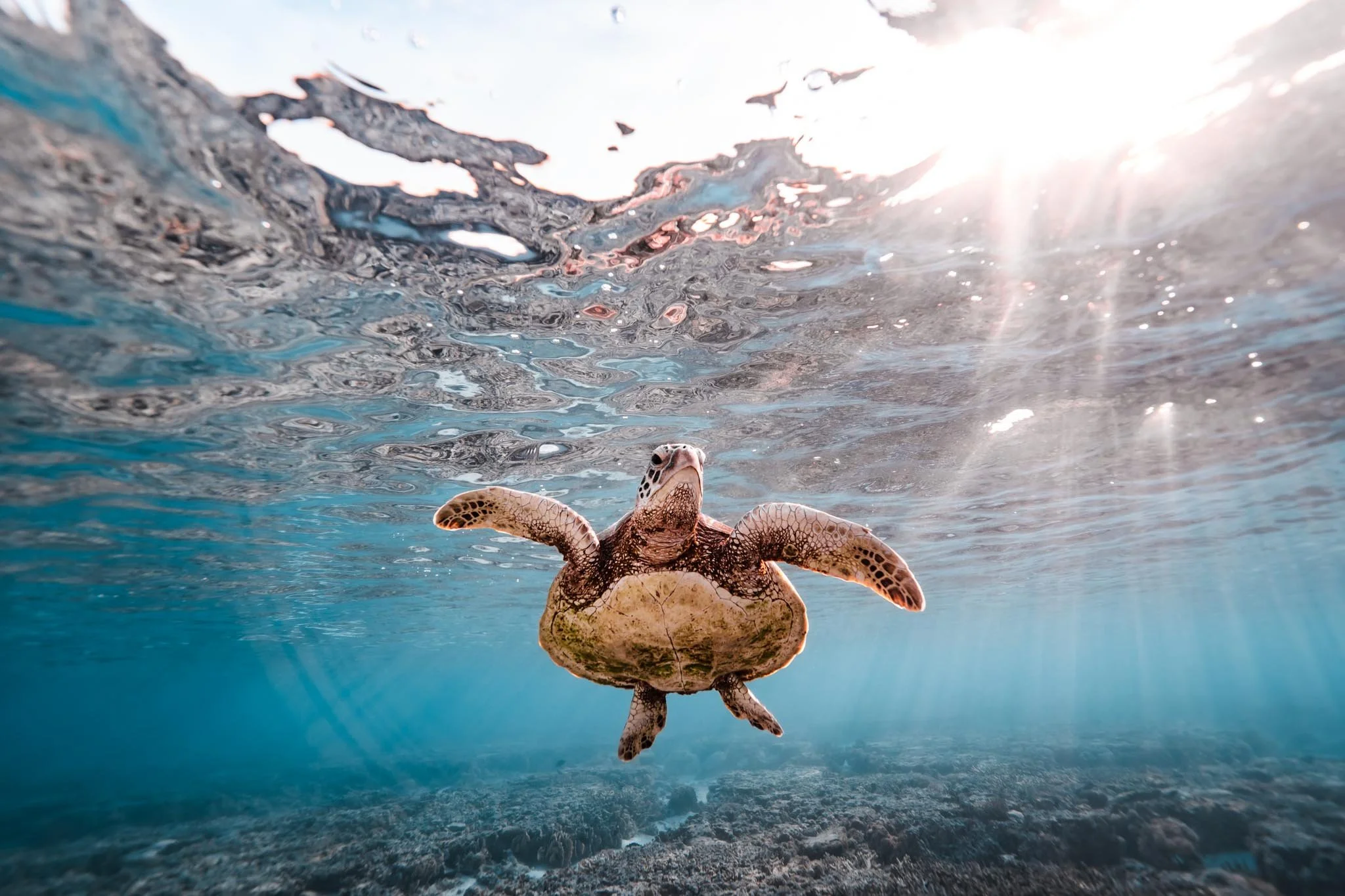
It's one of my favourite places to explore. Turtles are everywhere, and you can spend ages watching them cruise over the reef, surface for a breath and continue on their way. There are also octopuses to look out for, although spotting one can be a challenge when they're so good at blending into their surroundings.
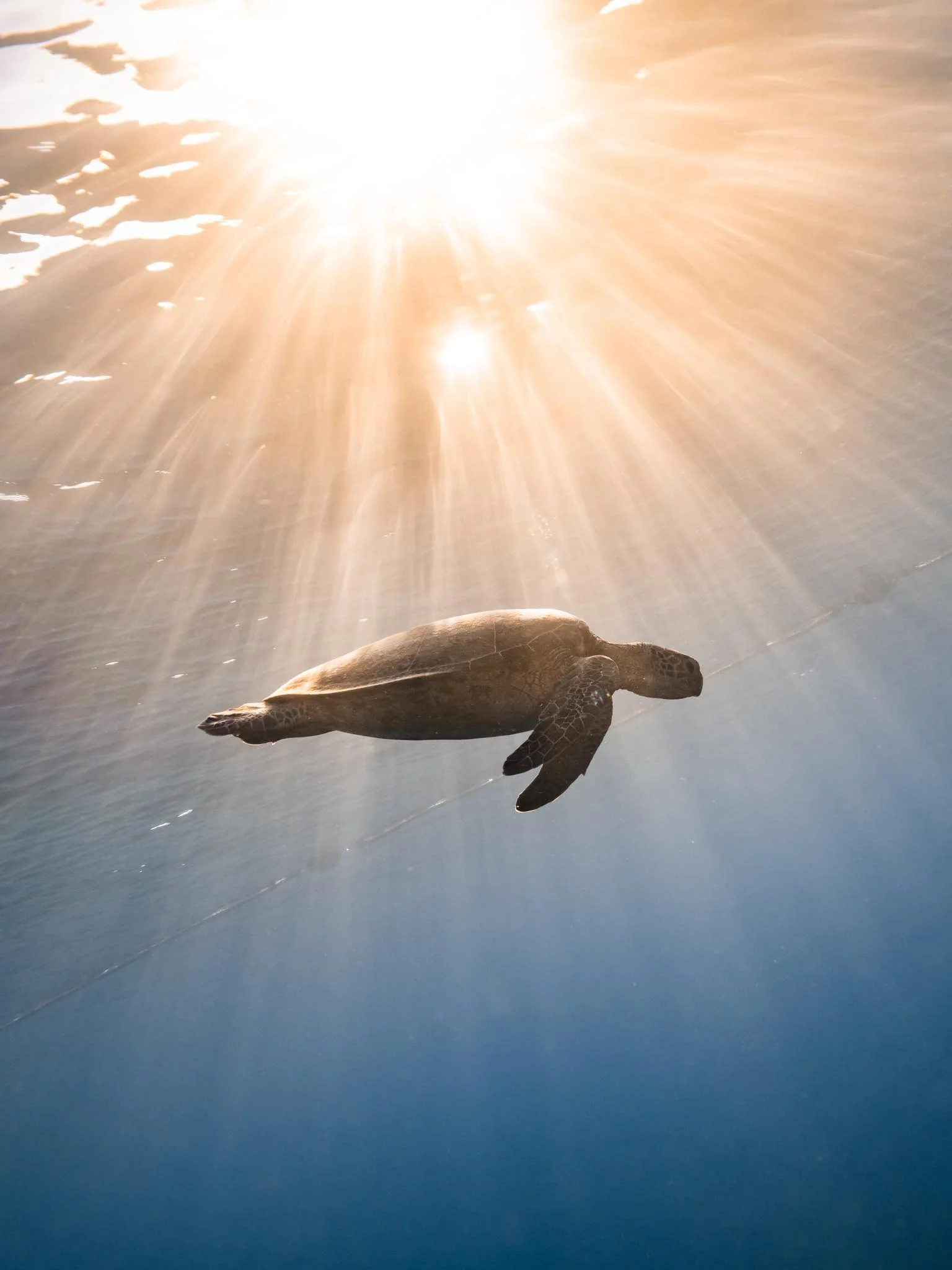
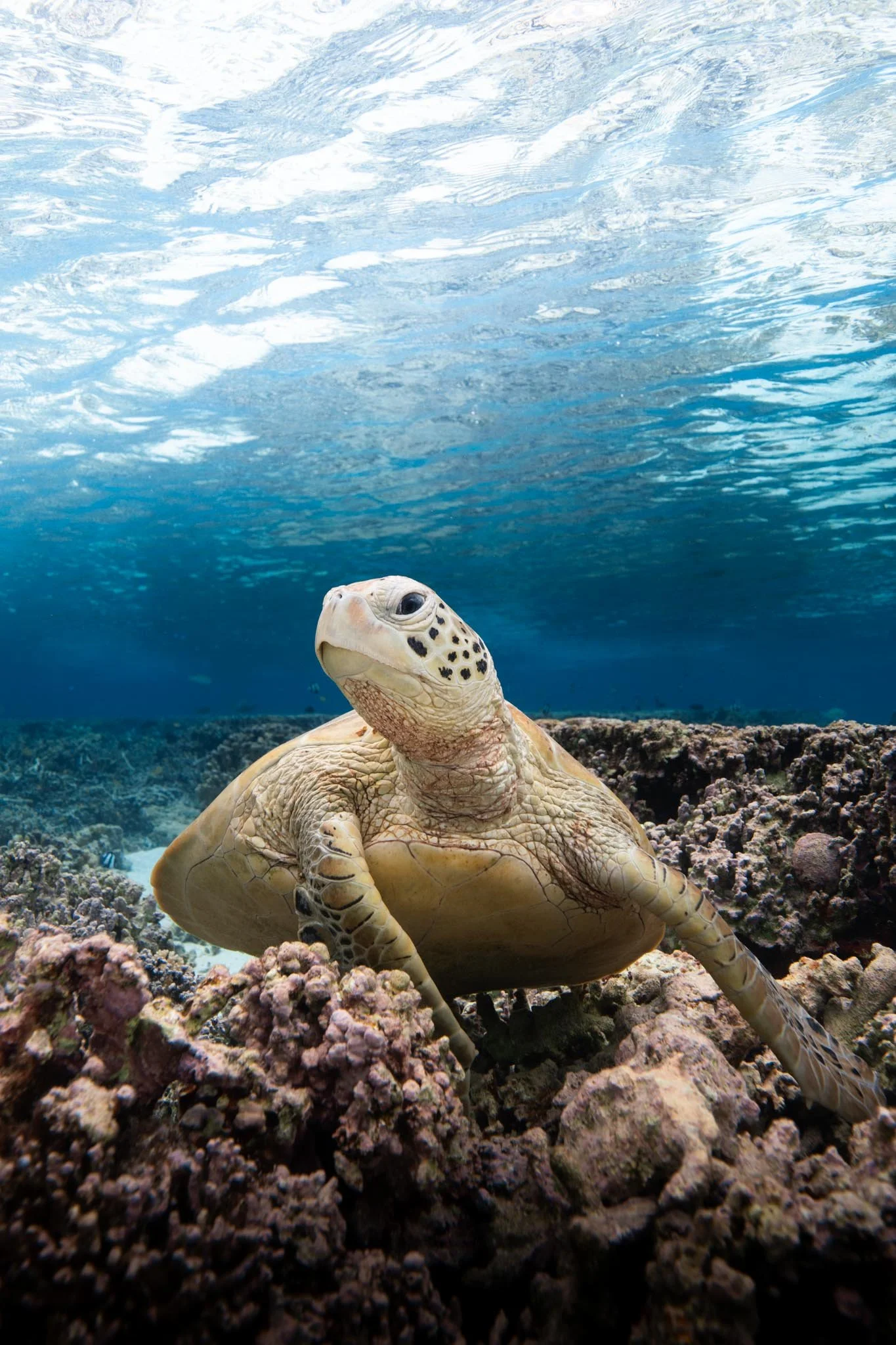
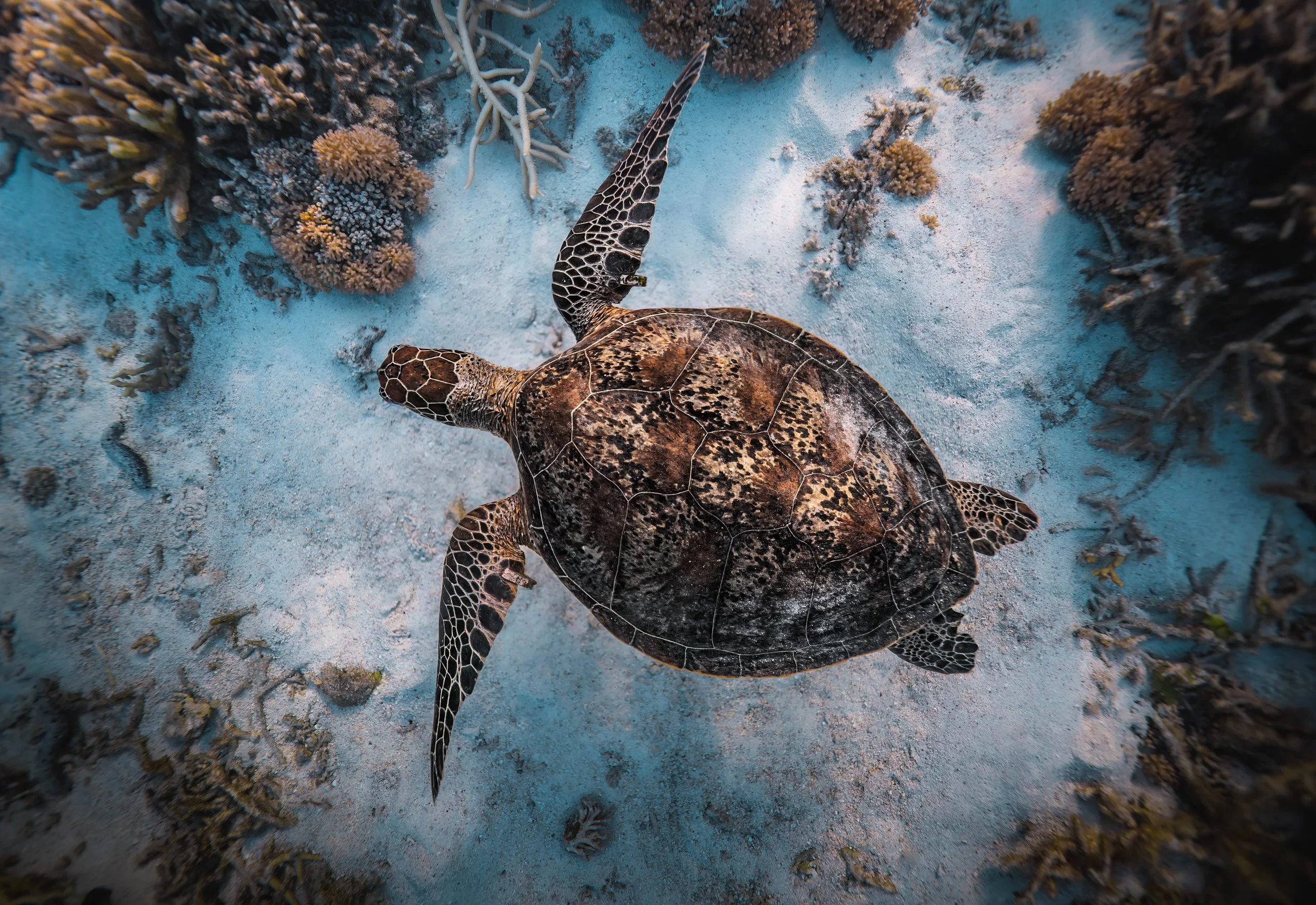
During my most recent visit in July, I was lucky enough to find Blondie, a rare leucistic green turtle.
Leucism is a genetic condition that reduces pigmentation in an animal's skin and shell. Unlike an albino animal, which lacks melanin, a leucistic animal can retain some pigment. This gives Blondie her distinctive pale appearance.
Seeing her in person was incredibly special, and I was thrilled to photograph her. One of those images has become my One in a Million print.
Green turtles normally rely on countershading to help conceal them: a darker shell when viewed from above and a lighter underside when viewed from below. This helps them blend into their surroundings in the open ocean.
A pale turtle like Blondie lacks much of that natural camouflage, potentially making her more visible to predators, particularly when she's young. It's a reminder of how challenging survival in the wild can be, even for an animal as remarkable as a sea turtle.
Finding Blondie felt like such a privilege. She's a beautiful reminder that even in a place I've visited several times, there are still extraordinary discoveries to be made.
Five giant whales and one very tiny human
As special as all those encounters have been, the most memorable experience I've had at Lady Elliot Island is one I witnessed with my own eyes, with only a little help from my GoPro.
I'd finished a morning snorkel with my dive buddy, who had to head back because her flight was departing soon. I stayed on the beach, waiting for the rest of our group to return from the water.
While I was waiting, I noticed whales close to shore. There was a lot of activity, with tails and pectoral fins slapping the surface. It looked like the beginning of a humpback whale heat run, when males compete for access to a female.
They were so close that I desperately wanted to get back into the water. But the conditions were rough, and I knew it wouldn't be sensible to head out alone when no one would know where I was. So, frustrating as it was, I waited.
As soon as the others returned, we headed straight back out.
The normally calm wade across the reef was anything but calm that morning. Waves were breaking around us as I dragged my heavy camera through the water, and somewhere along the way, I lost sight of the rest of the group. The surface was choppy, visibility was poor, and I couldn't see anyone around me.
I decided to stay just beyond the snorkelling lines, figuring that eventually someone would swim past.
I was only partly right.
The next time I lifted my head to look for the group, I spotted a humpback whale on the surface, around 50 metres away and heading straight towards me.
I had seconds to decide what to do.
I knew the encounter would be brief. The whales were moving, and there was no way of knowing exactly how close they'd come or how long they'd stay. I switched on my GoPro, then made a conscious decision to stop thinking about filming and simply enjoy the moment with my own eyes.
I'm so glad I did.
The first whale to appear was a male, which swam directly beneath me. Then came a mother and her calf, moving along the surface right in front of me.
For a brief moment, the mother and I made eye contact.
It's difficult to describe what that feels like. You're floating in the ocean, surrounded by water, when an animal weighing many tonnes looks directly at you. There's no glass, no barrier, no enclosure. Just you and a wild animal sharing the same space for a fleeting moment.
The calf was the smallest I'd ever seen, still pale in colour. I knew it must be a very young one. Behind them were two more males.
Four enormous adult humpback whales, moving through the water around me. And me, one tiny human, floating there trying to take it all in.
I hadn't planned this encounter. I hadn't known where the whales would be, and I certainly hadn't expected them to pass so close. After the rough swim out and the brief moment of losing sight of my group, I'd found myself in exactly the right place at exactly the right time.
Five giant whales and one tiny human with a very full heart.
It's a moment I'll carry with me for the rest of my life.
I still kick myself sometimes for not turning my camera on and capturing photographs of that encounter. As a photographer, it's hard not to wish I had images to look back on and share with others. But at the same time, I'm so thankful I made the decision I did.
Instead of watching the encounter unfold through a camera screen, I was able to be completely present. I could take in the sheer size of these animals, watch their movements and appreciate every second without worrying about settings, composition or whether I'd captured the shot.
I might not have photographs of that moment, but I have the memory, and sometimes, that's worth more than any image I could have taken.
Why I'll keep coming back
I think that's what I love most about the ocean and wildlife photography. You can plan a trip, research the animals you're hoping to see and spend hours looking for them, but nature will always have the final say.
You might spend a morning surrounded by manta rays. You might spot a rare turtle hiding in the lagoon, nearly miss a perfectly camouflaged shark, or find yourself face-to-face with a seabird that has absolutely no appreciation for your rescue efforts.
And sometimes, if you're very lucky, you might lift your head out of the water and find five humpback whales heading straight towards you.
Every visit to Lady Elliot Island has given me something different, and each one has reminded me how much there still is to discover. It's a beautiful place, not just because of the animals you can encounter, but because of the feeling of being immersed in a living, breathing reef.
These experiences are also why I love sharing my photographs. I hope they give people a glimpse of the animals I've been lucky enough to meet, encourage a little more curiosity about the natural world, and remind us why protecting places like this matters.
Lady Elliot Island, I'll see you again next year. And I can't wait to find out what surprises you have waiting for me.